Friday, April 01, 2005


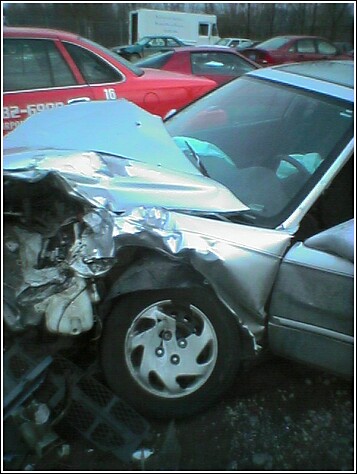
Kandice's new car-A PT Cruiser Posted by Hello
A post from a friend of mine:Dear Sisters and Brothers,

I think that the Terri Schiavo case is complex because it pits competing
values against each other. On the one hand, the case seems relatively
simple, especially as it was presented by the mainstream press.

1. The first area of conflict has to do with whom basic decision-making
rests. With an underlying jurisprudence rooted in Scripture, and thousands
of years of legal tradition, the courts ruled that Terri's husband was her
primary care-giver, and the one in charge of these decisions.

2. In the American system, as it was understood prior to the U. S.
Constitution becoming somewhat self-contradictory and being interpreted
"dynamically" rather than "statically," these matters should rest with the
state courts and not involve the Federal judiciary.

3. We are increasingly able to sustain human existence through "heroic
measures" such as respirators. Do any of us want to be kept alive
indefinitely with negligible brain activity and no realistic hope of
recovery?

Yet none of those three issues is so black and white in the Schiavo case.
The trouble is that one has to dig beyond the daily newspaper or network
news to discover the other side of the coin.

1. Michael Schiavo, in effect, divorced Terri when he married another woman
by common law and is now raising two children with her. This is the heart
of the matter, and had it been legally settled, it would have prevented the
entire agonizing drama. Once it was legally established that Mr. Schiavo
had abandoned his wife for another woman, he should have been removed as her
primary legal custodian and that role should have reverted to Terri's
parents, Robert and Mary Schindler.

2. It appears to me that Judge Greer made up his mind early on in this case
and then chose to ignore a lot of evidence thereafter that should have
caused him to reconsider his decision. Our legal system provides for
judicial review all the way up to the United States Supreme Court, and we
are a nation under a written constitution, one interpreted by the judiciary.
However, once that document has been separated from its historical moorings,
this can lead to a judicial tyranny where one branch of our government not
only overrules the other two, but actually begins to function as a de facto
legislature.

What is the remedy for this? I don't know because I interpret Romans 13
very strictly and would never resort to violence, much less, take up arms
against the government. But there are lots of other people who don't take
the Bible into serious consideration, and they don't have a problem using
violence to right a wrong. I wouldn't be surprised if the now,
self-excommunicated Baptist, George Greer, doesn't eventually meet a
twenty-first century John Brown like Paul Hill. That will be a sad day for
the Pro Life Movement. But were I a betting man, I wouldn't bet on poor
Judge Greer living a long, peaceful life, unless he moves out of the United
States. In the long run, I bet he'd rather be fed through a feeding tube
than to have to be accompanied by body-guards for the rest of his life.

3. Terri Schiavo was being fed through a feeding tube; that is a far cry
from a respirator. Back in 1974, I stood beside a member of my
congregation, watching his wife die after the doctors' disconnected the
devices that forced oxygenated blood to course through her veins. She died
within ten minutes of being disconnected. When the doctors proposed this
action, I had some reservations but supported my congregant's decision,
nevertheless. Looking back, I have no doubt that he made the right
decision. When my wife's mother came down with Alzheimer's disease back in
the early nineties, I watched its slow but steady progress as it stole her
mind and then her body. Alzheimer's is not a happy journey to the Celestial
City.

My mother-in-law's disease was managed by her family -- first, pretty much
by her husband, then by my wife. We moved her to Central Louisiana about
fourteen months before she died because my father-in-law simply could no
longer tend to her by himself. For many months, he would alternate his time
staying with us and traveling back to Florida to tend to things there. Then
on January 16, 2001, Mrs. Price was discharged from her last stay in the
hospital, and after one night in one of those Gulags for the elderly and
dying, she once again moved into our home. From that day until her death
around eight in the morning on May 9, 2001, she never got out of the bed.
She couldn't even turn herself or roll over; she could only wave her arms.
We watched as she developed gangrene on the heel of her right foot. The
nurses who came every other day debated with the doctor who oversaw her
care; it was decided not to amputate, and the dark spot grew. Then one day
the gangrenous, golf-ball-sized piece of necrotic tissue simply fell off; to
our amazement, she lived on a couple of more months.

In keeping with her living will, we did not allow "heroic measures," but we
always made sure that she had food and water. It would have been barbaric
to have denied her this comfort. For the last months of her life, she was
regularly given a morphine based drug for pain. I have no difficulty with a
physician administering pain-numbing drugs, even if they shorten somebody's
life. (Proverbs 31:6, 7: "Give strong drink to him who is ready to perish
and wine unto those that be of heavy hearts. Let him drink, and forget his
poverty, and remember his misery no more.") But it is murder to administer
those same drugs beyond the smallest level that it takes to numb the pain
for the direct purpose of ending a human life.

Terri Schiavo's situation is all very, very sad, but it is a situation that
takes place many times a day throughout America. It's simply that in most
cases, people's relatives haven't come to hate each other so viscerally and
to express that hatred so spitefully. Nor do we have the two extreme wings
in the culture war lined up outside, each playing to the media.

Would I want to live by means of a respirator? Not unless it was a
temporary measure performed with a view to my recovery.

Would I want to live with a feeding tube? That is much more complex. I
would want food and water -- that's for sure -- but if I couldn't receive
them other than by a feeding tube, I'm not sure. That depends on other
circumstances. I wouldn't want them if I had been in a coma for a long time
and had no reasonable hope of recovery.

Who should make that decision?

I don't fully trust the medical industry -- it used to be a profession, and
there are still a good number of physicians who are professionals -- but
because of funding issues involving insurance companies and civil
authorities, I don't trust this industry the way many people still do. Do
you expect all these bureaucrats to act completely ethically, detached from
financial considerations, whether or not they wear the initials, M.D., after
their names?

I trust my government even less. As Christians, we should pray for the
civil authorities over us; we should respect their offices and obey their
commands that do not force us to sin. But we should never view government
as our friend, much less trust it, even though it functions under God's
sovereign purpose.

I trust my wife, and beyond her, I trust my children and my family called
Grace Presbyterian Church. I trust that they would do for me what I would
do for them.

If my wife were in a long-term coma, with no realistic prognosis for
recovery, I would order the doctors to disconnect her respirator. But I
would do my best to see that she was comfortable and as free from pain as
possible. I would make sure that she had food and water, even if it
required constant attention and a lot of personal effort to give her these
vital things. But if she couldn't receive nourishment without a feeding
tube, and if she was completely unable to let her will be known, and if
there were no realistic hope that her situation would ever improve, I would
order her feeding tube removed. It's what I would want done to me.

Cordially in Christ,
Bob

"Though our outward man perish, yet the inward man is renewed day by day.
For our light affliction, which is but for a moment, worketh for us a far
more exceeding and eternal weight of glory; While we look not at the things
which are seen, but at the things which are not seen: for the things which
are seen are temporal; but the things which are not seen are eternal. For
we know that if our earthly house of this tabernacle were dissolved, we have
a building of God, an house not made with hands, eternal in the heavens.
For in this we groan, earnestly desiring to be clothed upon with our house
which is from heaven: If so be that being clothed we shall not be found
naked. For we that are in this tabernacle do groan, being burdened: not for
that we would be unclothed, but clothed upon, that mortality might be
swallowed up of life." (2 Corinthians 4:16-5:4.)

Robert Benn Vincent, Sr.
Grace Presbyterian Church
4900 Jackson Street
Alexandria, Louisiana 71303-2509

Tutissimum Refugium Sanguinis Christi
80 Hickory Hill Drive
Boyce, Louisiana 71409-8784

318.445.7271 church
318.443.1034 fax
318.793.5354 home
bob@rbvincent.com


 Posted by Hello

Wednesday, March 23, 2005

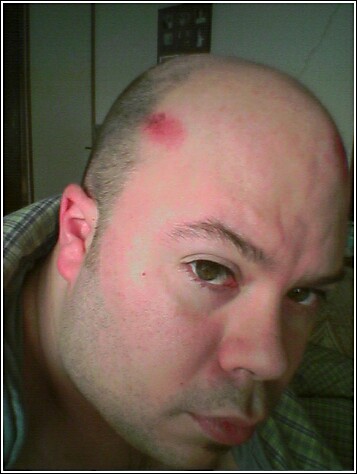
I’m not sure if I mentioned this or not, but I am flat on my
back now after the accident. I tried to work this past Friday, but the
effort was so uncomfortable and made me so tired that I was not able to
return. I am going to receive disability pay one way or the other depending
on the prognosis I receive tomorrow when I finally get in to see an
orthopedic doctor at the University of Michigan Hospital. Anyway, I’ve been
trying to catch up on my movie watching. I watched Anchorman (I do not
recommend it), The Alamo (Fantastic! Rent this one!) and finally, Luther.
Luther, to be blunt, was just awesome. It was inspiring and I
found myself cheering him on many times. It was an incredible character
study of how conflicted Luther was. His intention was never to leave the
Catholic church, but found himself extremely at odds with the church after
it refused to make any changes. Despite his many flaws, Luther had a
fervent commitment to Christ and, at least as his character was revealed in
the movie, was a bit naïve when it came to church politics. His commitment
to Scripture was awe-inspiring. Honestly, there were so many memorable
scenes in the movie that I cannot even begin to tell you how much I enjoyed
it. I’m now waiting for the movie about Calvin. :-)
If you guys wouldn’t mind, please continue to keep us in your
prayers. The insurance company money for the car was far less than we
expected (Minus the deductible and payoff, it was only $632) and although I
am grateful to get anything, I’m only receiving 60% pay for disability.
Most likely, we will have to use the insurance money for bills.
Also, and maybe Gary can shed some light on this, I’ve been
having strange dreams. The day after the accident, I was waking up
remembering more of the accident. Most of the dreams I cannot remember, but
last night I dreamed that I was kidnapped and beat up by two large men who
took me to a house with two other men. The funny part is (and you guys will
find this funny although at the time in the dream it was quite scary), one
of the men that I was taken to was William Shatner. The other was the short
K&B Construction guy from the TV show Home Improvement. Anyway, I was quite
lucky that my wife accidentally woke me up when she got up for work and the
dream ended just after the men released me.
Anyway, if I do not get a chance to tell you, I hope everyone
has a very blessed Easter Sunday!

Thanks everyone,

Dave M.

P.S. If anybody ever wants to chat, I’m online almost all day now…the laptop
is sitting on the coffee table beside the couch that is my new home and is
always on. Just email me.

 Posted by Hello

Sunday, March 20, 2005

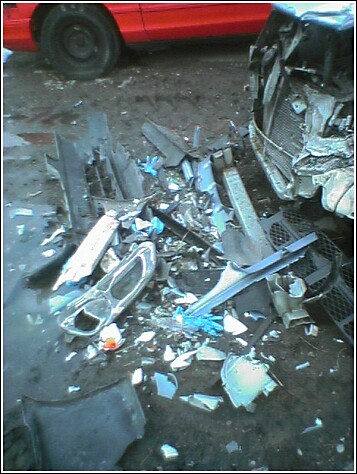
A week ago, I was waking up in great pain and still very confused. This morning, as I write this, my wife and I are preparing to go to church. To say that we are blessed is such an understatement. People that saw the car were not asking, “Is everyone ok?” They were asking “Who died?”
I have been dealing with a great deal of guilt. I have prayed, but all of my prayers have been those “theologically correct” prayers that although are heart-felt, are often only being done out of obedience, rather than desire. This morning, I woke up with a song on my heart. When I was little, my parents bought me a B.J. Thomas gospel album. My parents were pretty big southern gospel fans so I grew up on some of the “standards.” One of those was “His Eye Is On The Sparrow.” The lyrics are:

Why should I feel discouraged, why should the shadows come,
Why should my heart be lonely, and long for heaven and home,
When Jesus is my portion? My constant friend is He:
His eye is on the sparrow, and I know He watches me;
His eye is on the sparrow, and I know He watches me.

I sing because I'm happy,I sing because I'm free,
For His eye is on the sparrow,And I know He watches me.

"Let not your heart be troubled," His tender word I hear,
And resting on His goodness, I lose my doubts and fears;
Though by the path He leadeth, but one step I may see;
His eye is on the sparrow, and I know He watches me;
His eye is on the sparrow, and I know He watches me.

I sing because I'm happy,I sing because I'm free,
For His eye is on the sparrow,And I know He watches me.

Whenever I am tempted, whenever clouds arise,
When songs give place to sighing, when hope within me dies,
I draw the closer to Him, from care He sets me free;
His eye is on the sparrow, and I know He watches me;
His eye is on the sparrow, and I know He watches me.

I sing because I'm happy,I sing because I'm free,
For His eye is on the sparrow,And I know He watches me

I’ve spent my time now looking up and asking why. Not “Why did this happen?” but “Why, God, did you put our family through this? What are you trying to show us? What are you trying to teach us?” I’m not sure if I have all those answers yet, but one of those is to slow down and maintain faith. Thank you to everyone for your words of encouragement.

Thursday, March 17, 2005

Whoops! Let's try this again, It has indeed been a tough week. I saw this meditation this morning ironically written by a great theologian who died just this Saturday, the day that Kandice and I were in the accident. Here it is:
Our Last and Only Hope
A lesson in trust from a grounded crow.
By Stanley J. Grenz | posted 02/12/2004


"Everything is possible for him who believes." Immediately the boy's father exclaimed, "I do believe; help me overcome my unbelief." Mark 9:20-24

Trust me! I can help you." The minute I spoke the words, I realized how utterly useless voicing them was, indeed how ridiculous my entire demeanor must be. There I was, crouching with hand extended, slowing walking forward, talking to a crow. And I didn't even like crows.
It was promising to be another crisp fall day in the Lower Mainland in British Columbia. The sun was peering over the partly cloudy horizon as I took my daily morning walk. I was deep in thought, sorting through—well, to be honest, I was fretting about—the many details our pending move to Texas had imposed on the largely stress-free existence that I had grown accustomed to. As I rounded the corner and headed down the lane that runs along the Little League baseball field, my ruminations were interrupted by the obnoxious cawing of two crows. I quickly noticed the source of their consternation. In the grassy meadow, a third crow was jumping and flapping about, vainly attempting to fly. Somehow the scavenger had gotten his left wing stuck in the handle of a pink plastic bag. The poor bird had no chance whatsoever of getting airborne.
I gave the crow a wide berth and went on my way. His fellow crows would have to remedy his plight. And if they were unsuccessful? Well, one less crow in the world would not be a great loss, especially given the havoc these mean creatures can inflict on other birds.
I was only a few paces down the lane when the full importance of the crow's plight registered in my mind: Unless I do something, this hapless bird is going to die. I turned in my tracks. At first I remained a good distance away from the crow. Crows are capable of launching a dive-bomber attack so threatening that it elicits terror in the heart of anyone who evokes their ire. Despite what I surmised could be warlike chirping of the two potential assailants above, I decided to see if I could get near enough to the grounded bird to remedy his plight.
The imprisoned crow initially responded with a flutter-filled hop away from me. But soon he seemed to realize that he did not have the wherewithal to evade me, and he signaled his capitulation by collapsing in the grass, gazing at me. It was then that I spoke: "Trust me! I can help you." A fruitless, dumb gesture, I immediately thought. But how else could I assure the crow not only that I intended him no harm but also that I was his only hope for survival?
I would like to believe that the creature somehow understood my words. In any case, he didn't move a muscle—indeed, he appeared uncharacteristically calm as I advanced slowly but steadily in his direction. The crow seemed to have decided to entrust his life to my hands, for good or for ill. (Equally miraculous, from my vantage point, the two feathered dive-bombers kept their distance in the tree above.) Stealthily I moved in, until I was so close that I could have actually touched the small body that lay motionless in the grass in front of me. I repeated softly, "Trust me! I can help you." Then I reached out with both hands, carefully tore the plastic and pulled away the pink prison that had held the crow captive.
Mission completed, I resumed my walk. I became engrossed once again in my interior world, filled with the concerns about our pending move—selling a house, dealing with the immigration process, hoping that a position would open up for my wife. Again my thoughts were interrupted by a short series of caws coming from three crows flying overhead. As the birds expressed what seemed to be their gratitude, the words I had voiced just a few moments earlier reverberated in my mind: "Trust me! I can help you." But this time, they were not spoken by me, but to me.
I continued my morning walk, musing about how often our loving heavenly Father speaks to us in the midst of difficulties, and about the response—faith—that his words are designed to engender in us. And I was quick to draw the obvious lesson: Just as the hapless creature needed to admit the hopelessness of his plight, cease struggling, and trust me unconditionally to receive my assistance, so also we must entrust ourselves to God.
As important as this connection is, it was not God's message for me that crisp fall day. My musings took me to a deeper question: Why did the bird exercise faith? Only then did I glimpse what stands at the heart of the great mystery of trust: The crow had realized in his own way what we are called to realize. We only become willing to risk all and take the bold step of genuine faith—of entrusting ourselves to God fully, completely, unreservedly, for good or for ill—when we see in this particular situation that God is our last and only hope.
Stanley J. Grenz is the Pioneer McDonald Professor of Theology at Carey Theological College, Vancouver, British Columbia.
 Posted by Hello
It has indeed been a tough week. I saw this meditation this morning ironically written by a great theologian who died just this Saturday, the day that Kandice and I were in the accident. Here it is: Posted by Hello
Remembering Stan Grenz
The theologian died Saturday at 55.
posted 03/14/2005 10:45 a.m.
On Saturday, March 12, Baptist theologian Stanley Grenz passed away after suffering a brain hemorrhage at the untimely age of 55.
Dr. Grenz was a prolific writer, having authored or co-authored 25 books. He taught at a variety of institutions including Regent College, Baylor University, and Carey Theological College. Grenz was a leading expert on the theology of Wolfhart Pannenberg, but he was also a favorite theologian of the emerging church network. A brief biographical sketch can be found on his personal website .
Stan Grenz served as a consulting editor for Christianity Today, and in 2004 CT published this meditation about learning to trust God in the midst of our anxieties. We urge you to read it today in his memory.
Stanley J. Grenz was born in Alpena, Michigan, on January 7, 1950, the youngest of three children of the Rev. and Mrs. Richard A. Grenz. Stan is a graduate of the University of Colorado at Boulder (Bachelor of Arts with distinction, 1973), Denver Seminary (M.Div. with honors, 1976), and the University of Munich, Germany (D.Theol. magna cum laude, 1978), where he wrote a dissertation entitled “Isaac Backus--Puritan and Baptist” under the supervision of Wolfhart Pannenberg. Stan’s academic excellence as a student was applauded through membership in Phi Beta Kappa (University of Colorado) and by being the recipient of the Robert G. Kay Scholastic Award (Denver Seminary). During his professional career, he has been the recipient of a Fulbright Grant for sabbatical study in Munich, Germany (1987-1988) as well as a Theological Research Fellowship awarded by the Association of Theological Schools (1993), and he was named a fellow with the Henry Luce III Fellowship in Theology program (1999-2000). Stan has also been included in two editions of Who's Who in Religion, as well as in the 2002 edition of Who's Who in U.S. Writers, Editors and Poets.
On June 13, 1976, Stan was ordained into the gospel ministry. He has worked within the local church context as youth director and assistant pastor (Northwest Baptist Church, Denver, CO, 1971-1976), pastor (Rowandale Baptist Church, Winnipeg, MB 1979-1981), and interim pastor on several occasions. In addition he has preached and lectured in numerous churches, colleges, universities and seminaries in North America, Europe, Africa, Australia and Asia.
To date, Stan has authored or co-authored twenty-five books, the latest of which is Rediscovering the Triune God: The Trinity in Contemporary Theology (Minneapolis: Fortress, 2004). He has served as editor or co-editor for two Festschriften, contributed articles to over two dozen other volumes, and has seen to print over a hundred essays and an additional eighty book reviews. These have appeared in journals ranging from Christianity Today and the Christian Century to Christian Scholars Review, Theology Today and the Journal of Ecumenical Studies. Several of these essays and books have won writing awards in the USA and Canada.
Stan has served as president of the National Association of Baptist Professors of Religion (1989-90) and as a member of the national board of the American Academy of Religion (1989-90), the South Dakota Committee on the Humanities (1986-90), the editorial board of Perspectives in Religious Studies (1985-88), the Baptist Joint Committee on Public Affairs (1983-88), the steering committee of the Evangelical Theology Group of the American Academy of Religion (1988-1995; co-chair, 1990-1994), the Ethics Commission of the Baptist World Alliance (1986-2000), the Social Action Commission of the Evangelical Fellowship of Canada (1994-1996), and the steering committee of the Canadian Evangelical Theological Association (1996-2000). Currently, he participates in both the Doctrine Commission and the Theological Education Committee of the Baptist World Alliance, is a consulting editor of Christianity Today, and sits on the advisory boards of several publishing companies and Christian organizations.
For twelve years (1990-2002), Stan held the position of Pioneer McDonald Professor of Baptist Heritage, Theology and Ethics at Carey Theological College and at Regent College in Vancouver BC. After a one-year sojourn as Distinguished Professor of Theology at Baylor University and Truett Seminary in Waco TX (2002-2003), he returned to Carey in August 2003 to resume his duties as Pioneer McDonald Professor of Theology. In fall 2004, he assumed an additional appointment as Professor of Theological Studies at Mars Hill Graduate School, Seattle WA. Prior to his initial move to Vancouver, he was Professor of Systematic Theology and Christian Ethics at the North American Baptist Seminary, Sioux Falls SD (1981-1990). While in the pastorate (1979-1981), he taught courses both at the University of Winnipeg and at Winnipeg Theological Seminary (now Providence Seminary). From 1996 to 1999 he carried an additional appointment as Professor of Theology and Ethics (Affiliate) at Northern Baptist Theological Seminary, Lombard IL.
Edna Grenz is Minister of Worship at First Baptist Church, Vancouver, where Stan has sung in the choir and played guitar and trumpet in the worship team. Stan and Edna are the parents of two married children, Joel and Corina (Kuban), and one grandchild, Anika Grace Kuban, all of whom reside in the Vancouver area. Posted by Hello

Monday, March 07, 2005

Roy Moore: 'We Have No Morality Without an Acknowledgment of God'
As the Supreme Court decides how to rule after hearing arguments over the Ten Commandments, the former chief justice of Alabama's highest court says removing government religious monuments are like getting a ticket for driving 50 mph in a 55 zone.
posted 03/07/2005 09:30 a.m.

After being removed from his post as chief justice of the Alabama Supreme Court for refusing to remove a six-ton granite monument of the Ten Commandments, Roy Moore has taken his fight across the country. He says not only are monuments of the Ten Commandments constitutional, but some acknowledgment of God is necessary for the survival of the constitution. CT online assistant editor Rob Moll spoke with Moore the day after the Supreme Court heard arguments over two Ten Commandment cases, in Texas and Kentucky.
You had representatives attending the oral arguments on Wednesday. Do you have any initial thoughts about the case?
Both of the defendants in these cases, defending the Ten Commandments, are doing so with secular humanism, with our own history, arguing that the Ten Commandments are not relevant today. It's in a museum setting. It's the smallest of the monuments. They make every effort to distance themselves from God, and that is the danger that people do not realize. I hope people will wake up to this.
What we've got to watch here is not what they do, but what they say. If they leave the Ten Commandments or if they take the Ten Commandments and they base their ruling on secular humanism, that is a devastating precedent. It's basically saying you can do something as long as you don't profess it, as long as you don't believe it. That is the danger.
The Court refused my case because we said the monument acknowledges the sovereign God, which is permissible under the First Amendment. They then take these two cases that are argued on the basis of a denial of God's sovereignty, that it's a matter of history. The people that are arguing that position think they're doing right, but I would submit to you that it's a very wrong thing to do because you're bowing down to government.
That is the argument in other cases, that as long as the Ten Commandments or "under God" doesn't mean anything religious, then it's permissible.
One of the most offensive arguments that I've found was in one of the briefs said that any reasonable observer would recognize that this monument is in the town where Madalyn Murray O'Hair lived. During all that controversy, it was a hotbed of litigation, and it was never contested. That argument says that because the prime atheist in our country didn't protest, it should be okay. And that's terrible.
Because so many Christians make historical arguments for the Ten Commandments or other monuments, it may seem strange to hear you say that the government must acknowledge God. What is the legal basis for your argument?
It's the very purpose of the First Amendment. It's what we have the First Amendment for. That is still the right we have, to acknowledge God. It protected us from federal government interference. And that's exactly what's happening. The federal courts are saying we cannot acknowledge God. But they have no jurisdiction. It's the fundamental organic law of our country. God. God's law was the basis which entitles us to have a Constitution and a country.
The court is not even interpreting the First Amendment properly, despite the fact that they have no jurisdiction. When they do have jurisdiction they rule by their feelings, not by law. To properly interpret a law you have to interpret the words in the statute or constitutional amendment. That is "Congress shall make no law respecting an establishment of religion, or prohibiting the free exercise thereof," being the first part of the First Amendment. The courts are not even trying to do that. They're ignoring the words of the statute and ruling by their own feelings and predilections with meaningless tests that have no relationship to law—the coercion test, the endorsement test, and the historical analysis test.
To make that clear, I use an example. Say you were stopped for speeding and given a ticket and go to court in a municipality, and the judge said, "I'm going to have to put you in jail for six months and fine you $5,000." You say, "Why?" "You were speeding." You say, "Judge, I was going 50 miles per hour, the speed limit was 55."
He would stop you and say, "Wait a minute, we can't address the definition of speeding or what speeding is. From the reasonable observer standing on the corner, they said you were going faster than the other cars. It would be endorsing speeding if we allowed this to occur."
You would say, "Judge, I was going 50 and the speed limit is 55."
He says, "No we can't define the speed limit. And furthermore you coerced other drivers to pull over because they weren't going as fast as you."
You say, "That's not speeding. We've got to look at what the speed limit was."
Finally, if he said, "Well because you were going 50 and we've historically allowed people to go 50, we're going to overlook it."
We'll that's allowing you to do something you have every right to do. The speed limit was 55; you were going 50.
So you see what they're doing is ruling by paths that have no relationship when they don't define the words. That's the clearest example I can use to tell you what's happening with the Supreme Court. If you read their opinions, they sound so eloquent, so lofty, but they're meaningless. They're not related to law. The word religion was defined by the United States Supreme Court and by others as the duties which we owe to the Creator and the manner of discharging it, i.e. it recognized God and it recognized higher laws.
The Supreme Court doesn't want to recognize the definition. So as they did in my case in Alabama, they ignore it and say it's impossible to define. Their basic mistake is to assume that government gives you freedom of conscience, when our Supreme Court in 1931 recognized that freedom came from obedience to the will of God. They just lost those concepts.
As you said, those arguing to keep the Ten Commandments are not arguing that government should acknowledge God. You are the only one making that claim. What chance is there that the Supreme Court would recognize that right?
All I can say is it's our responsibility to offer the truth. It's plain, simple fact that the law is the law. It hasn't changed. The acknowledgement of God is basic to our society, to our law, and to our morality. Christianity is in a prime position to wake them up. I can't do it alone, and Christians need to be awakened to what's going on in our country. If we continue to let this happen, what will happen is a complete departure from our constitutional form of government. The basis of our morality is being destroyed. We have no morality without an acknowledgment of God.
Would you prefer the Supreme Court reject the Ten Commandments rather than allow them for only historical reasons?
I think the First Amendment of the United States Constitution doesn't prohibit displays acknowledging God, any acknowledgment of God, whether by state or federal official. My preference would be the United States Supreme Court dismiss the case and say they don't have jurisdiction. The First Amendment tells us to keep out of it. But if you ask how they could rule, I'd say, if they're going to leave the Commandments, they better recognize that nothing prohibits such conduct. But they don't have jurisdiction to rule.
 Posted by Hello

Thursday, March 03, 2005

When Gratitude Gets Complicated
Thoughts on Saying Thank You at Bethlehem and Desiring God
March 2, 2005 — Fresh Words Edition
By John Piper
Permanent Link
When you are in a position of receiving great blessing from many people, expressing gratitude can get complicated. This is our position both at Bethlehem and at Desiring God.
These ministries are sustained by the grace of God through the gifts of people. At Bethlehem this is entirely the case: we depend on God to cause his people to give $6,000,000 this year. We have no other source of income. At Desiring God, we are a not-for-profit ministry that does sell things and use the income to sustain the ministry. But our low prices, and our “whatever you can afford” policy, and our making web, audio, and radio available without cost, means that we depend on God to cause people to give hundreds of thousands of dollars without which the ministry could not do what it does.
God is merciful to do this. He keeps his promises: “My God will supply every need of yours according to his riches in glory in Christ Jesus” (Philippians 4:19). Thousands of people give to support Bethlehem and Desiring God. Those of us who lead are deeply thankful. We believe it is fitting to say so. The heart that does not feel thankful and does not feel like saying thank you is hardened by pride. The humble heart is amazed at God’s grace and people’s generosity. The humble heart loves to say thank you.
So we who lead are in a position of loving to say thank you to thousands of people. The situation at Bethlehem and Desiring God are significantly different in this regard. At Bethlehem we are a covenant community and becoming a member of this church involves making a covenant to give. “We engage to contribute cheerfully and regularly to the support of the ministry, the expenses of the church, the relief of the poor and the spread of the Gospel through all nations.” Therefore we do not ask for money from anyone outside, but only appeal to the members to support the work of Bethlehem.
Not only that, the leaders of the church do not know how much any member gives. One person, Paul Johnson, the financial secretary, knows that. If a member does not give, Paul should share that with the elders and it would move the elders, in love and patience, to ask why. But the elders do not know what people give. Therefore our expressions of gratitude are broad and general rather than personal and specific. We say repeatedly from the pulpit and other ways, Thank you, Thank you, to God and to our people. I say it again here: Thank you for cheerfully yielding to God’s leading in sustaining this ministry.
At Desiring God things are different. This ministry is not a church and has no covenant membership to support the work. It is governed by a board that is appointed by and accountable to the elders of Bethlehem. So it is under the authority of the church. But it has a measure of ministry independence that sets it apart from the way the church itself functions. Therefore Desiring God depends on gifts from people all over the world.
We do not ask for money on the radio. The reason for this is that we do not view the radio audience as a community of Christian supporters (though some of it is). We view it as the world in general. Our bent therefore is to give not get—to offer not ask. The radio is emphatically not a fund raising device. It is a means of spreading a passion for the supremacy of God in all things for the joy of all peoples through Jesus Christ. Once we have a personal contact from someone, and there is some evidence of interest and common cause, we feel free to ask them privately (usually by mail) for their help.
Then comes the unique challenge of how to thank them. We can say thank you on the radio, and we do in careful terms. But that is delicate because oh, how easy it is to slide into using words of thanks as a subtle way of asking for money. But thousands of our donors at Desiring God do not hear the radio program. If we are going to thank them, we must do so through the mail.
Here is where it gets more complicated. Should we send the same thank you letter to the person who gives $5 as the person who gives $5,000? That is, should larger donors get special attention? Should they get, perhaps, a note from Jon Bloom the Executive Director? A note from me? A phone call?
Here is where we presently stand. When Jesus saw the rich putting money in the temple box and then saw a poor widow put in her two coins, he said, “Truly, I tell you, this poor widow has put in more than all of them” (Luke 21:3). Does that mean that the $5 gift from the poor person should get greater attention from us than the $5,000 gift from the wealthy person, because the sacrifice was greater? Yes, if we know that is the case. But we are not Jesus. We do not know the circumstances of our givers, except in unusual cases.
There are three crucial factors that would create more thanks and more attention if we knew them: 1) the level of sacrifice that a gift represents; 2) the measure of good will in the heart; 3) the degree of trust that a person has in the ministry. None of these can be measured by the amount of the gift. A very large gift may not represent as much sacrifice, good will, or trust as a small gift. We simply cannot know the hearts of our donors.
Does this mean that there should be no special response to very large gifts? There is one factor that we can measure that differentiates a small from a large gift: the ministry expansion potential made possible by the gift. To put it more simply, larger gifts enable us to do more things. This is true no matter what the heart condition of the donor is. We believe that humble leaders should feel a special overflow of joyful gratitude in response to these larger ministry possibilities. And we believe that this special overflow should be expressed in special ways. It would seem strange to us if our hearts leaped up to God because we could now preach the gospel on five new radio stations, but we did not speak a special word to the donor who made it possible with a $50,000 gift.
Please pray for us. You can see the challenges to be biblical and humble and grateful. God sees the sacrifices behind the $5 gifts. Pray that our letters of thanks for them be full of heartfelt love and gratitude. And pray that we never, never schmooze with the rich.
In need of your prayers,
Pastor John
 Posted by Hello

Wednesday, March 02, 2005

Global Suspense
The trick of faith is to believe in advance what will only make sense in reverse.
by Philip Yancey | posted 03/01/2005 09:30 a.m.

Going through a stack of old Time magazines recently, I was astonished at how different the world looks now compared to 30 years ago. Back then Time was running cover stories on "The Coming Ice Age"; now we hear about global warming and devastating tsunamis. World maps showed a large red stain of communism spreading across Indochina and Africa. Economists predicted the end of American dominance and a new global parity among the United States, Russia, China, Japan, and Europe. Of all continents, Africa offered the brightest prospects for growth.
A more recent magazine, from August 2001, reported breathlessly on the latest developments in the mysterious disappearance of a House intern and her affair with a California congressman. I searched in vain for the words al Qaeda and Osama bin Laden. Somehow, it seems in retrospect, prognosticators missed all the defining political events in my lifetime, including the war on terrorism and the end of the cold war. As I went through the stack of magazines, I tried to remember how it felt at the time, when I truly feared the prospect of nuclear war, when Saddam Hussein was a U.S. ally, and Lebanon was the most dangerous place in the Middle East.
Pulitzer Prize-winning historian Barbara Tuchman once explained that in writing history she tried to avoid "flash-forwards." When a historian writes about the Civil War, for example, he or she should resist the temptation to include "Of course we all know who won" asides. From the early months of the war right through until Gettysburg, it looked as if the South might prevail. Tuchman tried to avoid flashing forward to a later, all-seeing point of view; she sought instead to recreate history for the reader, conveying a sense that "you are there."
Right now, regarding issues like the war in Iraq, the ascendancy of China, nuclear proliferation in Iran and North Korea, we truly are "there," unable to predict how history will turn out. Thirty years from now some researcher may pore over a stack of contemporary Time magazines with similar bemusement.
As I reflected on our poor record at predicting the future, it struck me that the Bible often centers on the act of waiting. Abraham waiting for just one child. The Israelites waiting four centuries for deliverance, and Moses waiting four decades for the call to lead them, then four more decades for a Promised Land he would not attain. David waiting in caves for his promised coronation. Prophets waiting for the fulfillment of their own strange predictions. Mary and Joseph, Anna, Simeon, Elizabeth, and Zechariah waiting like most Jews for a Messiah. The disciples waiting impatiently for Jesus to act like the power-Messiah they longed for. (Even cousin John flagged: "Are you the one, or must we wait for another?")
Still we wait. The nuclear threat from the U.S.S.R. has faded, along with the U.S.S.R. itself, but now we worry about "dirty bomb" attacks from terrorists. We no longer fear glaciers, except as they melt. A massive earthquake in the Indian Ocean proved a lot more damaging to Southeast Asia than did the SARS virus. How will all these crises turn out? Still trapped in the "now," we simply do not know.
Jesus' final words at the end of Revelation are "I am coming soon," followed by an urgent, echoing prayer, "Amen. Come, Lord Jesus." That prayer remains unanswered in an era of history perilously suspended between his first appearance, as a baby in a manger, and his second, as the one with blazing eyes described in one of Revelation's many flash-forwards.
In the last days, said Peter, some will scoff at the prospects: "Where is this 'coming' he promised? Ever since our fathers died, everything goes on as it has since the beginning of creation." Peter himself believed that "the end of all things is near." After two millennia of waiting, scoffers rule the day.
In a German prison camp in World War II, unbeknownst to the guards, the Americans built a makeshift radio. One day news came that the German high command had surrendered, ending the war—a fact that, because of a communications breakdown, the German guards did not yet know. As word spread, a loud celebration broke out.
For three days, the prisoners were hardly recognizable. They sang, waved at guards, laughed at the German shepherd dogs, and shared jokes over meals. On the fourth day, they awoke to find that all the Germans had fled, leaving the gates unlocked. The time of waiting had come to an end.
And here is the question I ask myself: As we Christians face contemporary crises, why do we respond with such fear and anxiety? Why don't we, like the Allied prisoners, act on the Good News we say we believe? What is faith, after all, but believing in advance what will only make sense in reverse?
 Posted by Hello

Thursday, February 24, 2005

Weblog: 'This Crowd Uses Gays as the Enemy'
Plus: Ga. abortion bill changed, Ron Sider's State of the Union on poverty, Christian manuscripts found in pharaoh's tomb, and other stories from online sources around the world.
Compiled by Ted Olsen | posted 02/22/2005 10:45 a.m.

On secret tapes, candidate Bush talks about James Dobson, the Christian Coalition, and how he keeps his ego in check
The White House's immediate reaction to Doug Wead 's release of secretly taped conversations with George W. Bush is to label Wead a Judas. "These were casual conversations with someone whom the President considered, or believed to be, a friend," is the repeated line from White House spokesman Ken Lisaius.
That's the buzz on Wead from journalists, too
"There is no kind way of saying that this is anything but a betrayal," says the Rocky Mountain News in an editorial.
The Dallas Morning News agrees. "Wead … pretended to be the future President's friend—Mr. Bush's pet name for him was 'Weadie'—while surreptitiously taping the unguarded Mr. Bush hoping for … what, exactly?" the paper asks in an editorial. "To cash in if Mr. Bush became President? It sure looks that way: Mr. Wead has a new book to promote. The tapes tell us little new about the character of the President, but they speak volumes about the character of Doug Wead. He's a former Pentecostal minister, so surely he was taught that it profits a man nothing to sell his soul, even to gain the world. Alas for poor Weadie, who settled for the front-page of the [New York] Times!"
Even David D. Kirkpatrick's New York Times article keeps returning to the idea that Wead—how to put it?—doesn't share Bush's high values on loyalty. One such clue: "A White House adviser to the first President Bush, Mr. Wead said in an interview in The Washington Post in 1990 that Andrew H. Card Jr., then deputy chief of staff, told him to leave the administration 'sooner rather than later' after he sent conservatives a letter faulting the White House for inviting gay activists to an event."
But while Wead gets accused of "hypocrisy" (The Dallas Morning News's word), Bush comes off as honest and anything but a hypocrite. One wonders if the White House isn't quietly cackling about Sunday's front page news.
With little variation, the newspapers say that the tapes reveal little about the President except that he's pretty much the same guy publicly that he is privately.
"If this is a window into his soul, it's not such a bad view," says Newsday columnist James P. Pinkerton .
A Los Angeles Times editorial finds plenty to complain about, noting that Bush has abandoned what he calls "my shtick, which is, 'Look, we have all made mistakes.'"
'That's a true statement'
But if there is news here, it's that the conspiracy theorists were dead wrong in supposing that a) Bush isn't really an evangelical and doesn't believe all that religious stuff, but just uses it for his own political ends, and/or that b) Bush is a tool of the Religious Right and is the puppet of "theocrats."
In fact, the tapes reveal a strong personal spirituality on Bush's part along with ambivalence toward religious political groups.
When Wead warned Bush, "Power corrupts," Bush countered, "I have got a great wife. And I read the Bible daily. The Bible is pretty good about keeping your ego in check."
Bush was willing to meet with evangelical leaders privately, but was wary of public rallies with them. Kirkpatrick reports, "When he thought his aides had agreed to such a meeting, Mr. Bush complained to Karl Rove, his political strategist, 'What the hell is this about?'"
Once he did meet with the leaders, Bush kept to the basics: "As you said, there are some code words. There are some proper ways to say things, and some improper ways. … I am going to say that I've accepted Christ into my life. And that's a true statement."
Apparently one Christian leader that had some doubts—or at least was perceived to have doubts—about how much Bush believed those code words was Focus on the Family founder James Dobson, whom Bush went to visit in September 1998. Kirkpatrick reports:
"He said he would like to meet me, you know, he had heard some nice things, you know, well, 'I don't know if he is a true believer' kind of attitude," Mr. Bush said.
Mr. Bush said he intended to reassure Dr. Dobson of his opposition to abortion. Mr. Bush said he was concerned about rumors that Dr. Dobson had been telling others that the "Bushes weren't going to be involved in abortion," meaning that the Bush family preferred to avoid the issue rather than fight over it.
"I just don't believe I said that. Why would I have said that?" Mr. Bush told Mr. Wead with annoyance.
By the end of the primary, Mr. Bush alluded to Dr. Dobson's strong views on abortion again, apparently ruling out potential vice presidents including Gov. Tom Ridge of Pennsylvania and Gen. Colin L. Powell, who favored abortion rights. Picking any of them could turn conservative Christians away from the ticket, Mr. Bush said.
"They are not going to like it anyway, boy," Mr. Bush said. "Dobson made it clear."
If Bush still perceives Dobson as an unsatisfiable perennial critic, it may explain why a Bush aide recently told Time , "We respect him greatly, but [Dobson's] political influence is not everything people might think." (So far, there's no response from Focus .)
While Bush suggested that he was willing to fight on abortion, he seemed awfully reluctant on homosexuality:
"I think he wants me to attack homosexuals," Mr. Bush said after meeting James Robison, a prominent evangelical minister in Texas.
But Mr. Bush said he did not intend to change his position. He said he told Mr. Robison: "Look, James, I got to tell you two things right off the bat. One, I'm not going to kick gays, because I'm a sinner. How can I differentiate sin?"
Later, he read aloud an aide's report from a convention of the Christian Coalition, a conservative political group: "This crowd uses gays as the enemy. It's hard to distinguish between fear of the homosexual political agenda and fear of homosexuality, however."
"This is an issue I have been trying to downplay," Mr. Bush said. "I think it is bad for Republicans to be kicking gays."
Told that one conservative supporter was saying Mr. Bush had pledged not to hire gay people, Mr. Bush said sharply: "No, what I said was, I wouldn't fire gays."
As early as 1998, however, Mr. Bush had already identified one gay-rights issue where he found common ground with conservative Christians: same-sex marriage. "Gay marriage, I am against that. Special rights, I am against that," Mr. Bush told Mr. Wead.
The New York Daily News doesn't get it:
The disclosures could weaken support for Bush with his conservative base — and crack his renowned aura of predictability and discipline.
"It ought to be damaging," said Baruch College political scientist Doug Muzzio. "It's hypocritical to say one thing now but to have said other things … in the past."
A senior Democratic operative added, "Put aside the admission of drug use, his comments about gays are certainly not going to energize his base."
Really? Being against gay marriage and "special rights," but insisting, "I'm not going to kick gays, because I'm a sinner" sounds straight down the middle of the evangelical world to Weblog. Criticizing the Christian Coalition for "using gays as the enemy"? Preach it, brother, and we'll turn the pages. The only people who are going to be upset with these comments are those whom Bush might say, "They are not going to like it anyway, boy."
 Posted by Hello
this is an audio post - click to play

Friday, February 18, 2005

Not a Tame Lion
An engaging theologian questions the Jesus of modern scholars.
Reviewed by Jeremy Lott | posted 02/15/2005 09:15 a.m.

FAMILIAR STRANGER:An Introduction toJesus of Nazareth Michael J. McClymond, William B. Eerdmans, 224 pp.; $16
For the last few years I've threatened to write a book titled The Jesus I'll Never Know. It would be a response to the tendency in the wider world of U.S. Christianity to personalize the Son of Man—and tame him in the process.
As the vulgar Eric Cartman character of the South Park cartoon memorably put it, Christian tunes often sound like love songs that swap in "Jesus" for "baby." Likewise, in the M. Night Shyamalan movie Wide Awake, Rosie O'Donnell played the role of Sister Terry, a baseball-cap-wearing nun who assigned her young students chapters in the workbook Jesus Is My Buddy as homework.
The point of my book would be that the closer we get to the Gospels, the more we realize that these four witnesses to Jesus' life and ministry intentionally placed some distance between the reader and the wonder-working preacher from Nazareth. Of Jesus' childhood we know little. We get a quick peek at him as a young man, going at it with scribes in the Temple (foreshadowing the fireworks to come); then we see him fully grown, being baptized by John, proclaiming the kingdom of God, teaching, healing, casting out evil spirits, calming stormy waters, and hurtling himself toward his own demise by refusing to make nice with Jerusalem or Rome.
But we don't really "see" Jesus. For some reason—possibly the Jewish prohibition of idolatry—the Gospel writers forgo almost all physical description of him. Whether Jesus towered over the crowd like Saul or could see eye-to-eye with Zacchaeus we know not. And so we guess: The history of Christian iconography attests to the thousands of attempts to give physical expression to this mystery.
One of many the things that I appreciate about Michael J. McClymond's new introduction to scholarly approaches to the life of Christ, Familiar Stranger, is that the theologian from Saint Louis University respects this distance. McClymond scorns scholarly attempts to intuit Jesus' feelings and motives. And yet he wields modern Bible scholarship as an effective tool to goad us closer to the truth.
The buildup is methodical but effective. In the opening chapters, McClymond gives people a rough overview of the current scholarship of the issues surrounding Jesus' life and ministry. He starts with the broader religious and political culture and, as the book progresses, narrows to Jesus' mission and message. When he weighs into scholarly controversies, he has a way of being reasonable. Given his careful approach—his reluctance to put Christ on the couch, if you will—it should hardly surprise that Jesus-Seminar-type arguments do not make out well.
McClymond seems to realize that Jesus' message is a little easier to get at than his portrait, but not by much. He spoke in parables, and the context for making sense out of them is not always obvious. Even his closest confidants either didn't know or didn't fully believe that he was God's "only begotten Son" until after the Easter event.
In his post-resurrection appearances, Jesus is very much alive but at the same time different. Physically, he's not a ghost, but he's not what we would normally describe as human. He has holes in his hands and side and seems to have need of food, but normal constraints like, oh, walls or gravity, no longer apply. Attitudinally, he seems more impatient, more driven, more aloof than the prophet who would not let his audience go away hungry, and who insisted that the little children be allowed access to him. He appears driven to complete his mission and go home.
Overviews of Jesus scholarship are hardly new. McClymond notes the most famous author in this genre was Albert Schweitzer, the German physician who wrote The Quest of the Historical Jesus. It was a depth charge of a book whose impact still reverberates among Jesus scholars. The physician ridiculed attempts to reconstruct Jesus as an enlightened liberal and forcefully pressed the case that these academics often view Jesus through the narrow lenses of their own concerns.
If scholars thought there was no such thing as divine intervention, Schweitzer argued, then Jesus was just one smart cookie who was misunderstood. If a professor had a strict religious upbringing that he was trying to live down, then Jesus was some kind of ancient hippie, and all that fire-and-brimstone stuff was a product of the conflict between the religious authorities and the early church.
Jesus the Magician
No one would accuse Schweitzer of fashioning a mirror-image Jesus with his failed apocalyptic prophet of doom. Nor have all modern scholars projected themselves onto Jesus. But they have looked at the same data, with some supplemental material thrown in, and come up with different reconstructions: from Jesus the Torah-observant rabbi to Jesus the magician to Jesus the cynical, wisdom-spouting sage. As McClymond deftly puts it, "The scholars' reconstructions are balanced as delicately as an artist's mobile: touch one piece and all the rest tremble in their places."
McClymond is a theologian and not a text critic or a language scholar, so he is inclined to pull strands of information together, rather than apart. He challenges the sometimes narrow field of biblical studies by insisting that the distinctions that seem so important for conference papers and journal articles are not significant for helping most Christians to understand the life and message of Jesus of Nazareth.
Yes, Jesus was a teacher of Jewish wisdom, the author says, but he also warned that the end would come, and many would be caught unawares. He was kind, but he was also "a totalitarian," insisting that he was the one true path to God the Father.
In contrast to what McClymond calls the "family values Jesus" of modern evangelicalism, the author issues some "hard sayings" of his own in the final chapter. The two most stinging are "Jesus sided with the poor"—which might call for some family sacrifices—and "Jesus was a home wrecker" (recall his warning that following him would bring division). McClymond's own all-too-brief portrayal of Jesus is what the kids in Narnia would have called "not a tame lion."
To make their cases for a kinder, gentler Jesus, modern scholars must exclude large chunks of Jesus' teachings. McClymond argues that most proposals to exclude whole classes of Jesus' statements simply won't work. He gives two reasons. First, we don't know enough about the composition histories of the Gospels to do this with any degree of confidence. Second, it reeks of cherry-picking.
If the reader decides to look for a certain predetermined Jesus and to exclude all contrary evidence, McClymond says, then she will find what she's looking for—but probably miss the guy who changed the world, and overcame it.
Jeremy Lott is the foreign-press critic for GetReligion.org .
 Posted by Hello
this is an audio post - click to play

Wednesday, February 09, 2005

this is an audio post - click to play
Thinking Biblically Commentary 2/7/04
What's With The Divisiveness ? A Few Thoughts On Christian Unity and Judgment (Part 1 of 3)(no time to read ? Listen to it online: http://theologicallycorrect.com/realaudio/unity-part1.m3u - 13:45)

I recently caused a bit of a stink (don't I always) when a friend of mine posted on a discussion board that I frequent regarding her experience at a Benny Hinn crusade. After some other folks on the board noted that Hinn had been exposed as a fraud on Dateline a few years ago, I chimed in with Hinn's history of false prophecy and false teaching, and providing a link to his 2000 prophecy that Jesus would physically appear with him during his crusade in Nairobi, Kenya.As in times past, I got an eyeful via e-mail, accusing me of being divisive, stuck on 'head knowledge' and not being concerned about people, lack of compassion and a few other things. I told the person I wrote back to that I wondered if they'd read their bible regarding what the scriptures say our responsibility is when folks preach false doctrine.This isn't a new problem, by the way. Paul warned Pastors in Acts 20 to guard the flock because as soon as he left, savage wolves in sheep's clothing would try to make their way in and destroy the flock with false teaching. Hinn's not the only guilty party here. I've heard (and have saved here on site) a whole sermon where Creflo Dollar denies that Jesus Christ was God during the incarnation. Yet folks still flock to his church and conferences like ants to a picnic. What's even worse is that even in the face of direct evidence, some folks seem not to care about false doctrine. Just as long as we all 'love each other in Christ', it'll be ok.Speaking of false brethren, thanks a lot Mase and R. Kelly. Mason Betha, for those of you who don't listen to hip-hop, was the second up and coming starchild of Bad Boy Records (owned by Sean 'P-Diddy' Colmes). A few years ago, after Bad Boy's headliner act, Notorious B.I.G. was gunned down, Mase left the hip-hop scene, claiming to be born-again. "Man, Tupac and Big lived that life and look at where they are now. You think I want to end up there ?', he told a popular magazine. So Mase left. He began preaching on how hip-hop music was 'evil' and disdained ALL manifestations of it - even slamming gospel hip-hop artists like the very theologically sound Cross Movement.Well, it's 2005 and Mase is not only back, he's back like he's never left (his album dropped in August of 2004). All of his spokespersons have put a positive spin on his sudden return to what he once called evil, never mentioning any of his past comments. They, instead, say that he's now going to minister to those in the industry and be one of the few forces in the industry with clean lyrics. Don't think folks in the world haven't noticed. Rappers like Cam'ron have called up local NYC radio stations while Mase was on-air and called him a hypocrite to his face. Rapper Fat Joe of the Terror Squad sings 'I was goin' to find God, but now that Mase is back, I think I'd rather find a ménage.' When Mase was ordained as Pastor over his own S.A.N.E. (Saving A Nation Endangered) Church International after only a few months of leaving out of the hip-hop game, who didn't see this as 'too soon' ?Do I even need to mention R. Kelly ? In one breath, he's got a song out entitled 'You Saved Me', in the next, he writes about a lady moving her body in a seductive fashion ('Move Ya Body Like A Snake, Ma'). Kells lost his credibility a while ago and has been a bit of a joke amongst many, especially in the African-American community. He's had a history of accusations of sexual misconduct with underage girls and a history of shutting his accusers up with money. Anyone else thinking Kirk Franklin endorsed him a bit too soon a few years ago in New Man magazine ?Of course, this is the point where I say 'now let's stop and think biblically about this for a moment'. What's the common denominator in all of the examples given above ? Why am I bringing up divisive topics like who might be brethren and who ain't and running down lists of sins ? Don't I have my own sins to deal with and couldn't someone just as easily pull out a list of things we've all done which have served to drag Christs' name through the mud ? Doesn't the Bible tell us not to judge ?Putting aside all issues named above, let's FIRST talk about the divisive issue of whether or not believers should make 'judgment' calls against the behavior of folks who claim to be believers. The answer is an unequivocal YES. This doesn't constitute a judgment on the heart of a person - only God can judge the heart, because only God sees the heart. But believers ARE commanded - repeatedly - in the NT to judge the FRUIT of the lives of professing believers around them. The other half of Matthew 7:1 reads like this: "2 For in the same way as you judge others, you will be judged, and with the measure you use, it will be measured to you. "Why do you look at the speck of sawdust in your brother's eye and pay no attention to the plank in your own eye? How can you say to your brother, 'Let me take the speck out of your eye,' when all the time there is a plank in your own eye? You hypocrite, first take the plank out of your own eye, and then you will see clearly to remove the speck from your brother's eye." (Matthew 7:2-4, NIV) What Jesus is telling us here in this very hilarious word-picture is that we are to judge with RIGHTEOUS judgment. The same standard for judging, for example, false teaching, MUST equally be applied to both the judger and the judgee. This introspection is given as an admonition to be 'real' with our Christianity. No one could call Mase a hypocrite if he'd fess up that he was wrong in the past on calling hip-hop the 'devil's music'. He'd be judging his own work fairly - both past and present AND he'd be letting us know he is 'real' and capable of being wrong and open for correction.But that's not all. We're commanded to 'diligently test all things' in 1 Thessalonians 5:21 and hold on to that which is good or proved. The image is of a jeweler applying a hot fire to rock of gold to find impurities. In 1 Corinthians 11, we are told that every man is to examine himself before coming to the table of the Lord. And further, Paul chides the church for not disciplining its' membership and points to it as proof of why some have grown weak, sick and some have passed away. A few chapters prior in chapter 5, Paul tells the very loving and tolerant Corinthian church to put out a man who has been involved in an incestuous affair with his mother-in-law. The reason ? A little leaven leavens the whole lump. Put away the evil from among you. Do not associate with someone who claims to be a brother, but whose visible life is either "sexually immoral or greedy, an idolater or a slanderer, a drunkard or a swindler" (1 Cor. 5:11, NIV). Don't even have lunch with him.But 1 Corinthians 2 is the clincher. Believers are told that because we have the Spirit of God, we are qualified to judge things - not just some things, but ALL things. 1 Timothy 3:16-17 tells us that the scriptures are God-breathed and are to be used for reproof, correction, training in righteousness and all areas of the Christian life so that the man or woman of God may be thoroughly equipped to carry out every good work. How in the world can you decide what is a 'good work' if you're not judging anything to be good or not good ?Many of our churches today are missing this level of discernment. They do not judge righteously - in fact, many don't judge at all! And here lies the root of the problem facing believers and their visible unity.Such things were not a problem in the early church. When false teachers floated around teaching that the resurrection and final judgment had already passed, Paul did not only deal with the doctrine at length in 2 Thessalonians, but he named names. This point is important - if someone was going around murdering folks, wouldn't you think it stupid of the police to issue a statement saying 'Well, we just want to let you know there's someone murdering people. We know his name, but out of kindness, we're not going to reveal it to the public. We don't judge people.' How much more for those who teach doctrines that lead people into SPIRITUAL death! So Paul tells us to 'mark off' or 'point out' folks who cause these types of divisions in congregations (2 Thess. 3:14) and not keep company with him. Paul reminds us of folks like Hymenaeus repeatedly in 1 Tim. 1:20 and 2 Tim. 2:17 who are false teachers. Jude tells believers to 'earnestly contend for the faith' in Jude 3 and 4. All of these passages are utterly useless if the believer doesn't make some 'judgment' as to what the faith is and what the faith isn't. Further, all of these commands to abstain from company with folks who fall under these categories cannot be carried out if we don't take time to analyze the fruit put out by folks who claim to be brothers. It is in this non-discerning atmosphere that 'false prophets' secretly bring in destructive heresies, as foretold in 2 Peter 2:1."Wait, Kerry.. I thought this was about Christian unity ?" It is. We need to have discernment, first and foremost on WHAT it means to be a Christian and WHO we call 'brethren'. One of the questions recently posed to me by a charismatic believer who shuns my criticisms of Benny Hinn is 'What Did the Holy Spirit Tell You ?' Well. God doesn't work in a vacuum of ignorance. Old Testament prophets were studied and steeped in the scriptures and all they taught. The bulk of today's pseudo-prophets and 'evangelists' have about as much in common with OT prophets (or NT Prophets for that matter) as a Lexus RS 330 has in common with a horse and carriage. The falsity of their claims becomes apparent when they can't even get basic doctrine right - or don't care to. Christ said His sheep know Him and hear His voice. It is highly unlikely that His audible voice would discourage further systematic study of His word, which is His written voice. And until we get back to the final 'standard' for judging all things righteously, which is the Word of God, the church will remain divided.When we take the offensive with righteous judgment and judge the fruit of those professing to be believers - well, a lot of things come to light. First, we know that any true prophet of God won't fudge on basic doctrine. So when a T.D. Jakes says 'I've purposely remained aloof from theological controversies because they don't matter to me', we know something is WRONG with this picture. So when Benny Hinn comes forth and claims to make a prophecy that Jesus will appear physically on the platform with him during his crusade, we know that this is false. After Jesus left the earth in Acts 1, the angels told us He would return in like fashion as He left. We see this will be fulfilled in Rev. 19 at His second coming. So Hinn's theology is already suspect. Even examining the truth of his prophecy and whether or not it came to pass - Hinn falls terribly short.When Creflo Dollar comes out and teaches that Jesus was not God the Son when He entered humanity, red lights go off all over the place for me (and if you believe the scriptures, they should for you too!). John 1:1-14 vs Creflo...guess who wins. No matter how many people attend Creflo's seminars, he's a heretic if he gets this point wrong (and he does). He is NOT a brother - and falls under the condemnation of 2 Peter 2 and Jude 8-17.When Mase gets ordained in a short amount of time with no solid theological background coming straight out from the world, the passage on the qualifications for a bishop or elder come to mind. one of which is NOT to lay hands on a new convert. So Mase's going back into what he once called evil and having other rappers mock him and Christ is no real surprise to me.When I hear R. Kelly come out sounding spiritual in one song and quite fleshly in the next, questions like "Can both fresh water and salt water flow from the same spring?" I truly wonder if this brother is simply pimpin' folks in church because he has a good voice. And even moreso, I wonder why those who name the name of Christ who have named him as a 'brother' in the past are not condemning his behavior and calling for his visible repentance. Of course, many of us have 'R. Kellys' in our churches.like the choir director and a member living in open sin or the members who cohabit and engage in sexual sin intercourse prior to marriage. Or the openly homosexual deacon. Need I go on ?The question I've heard is 'Where is your love and compassion ?' Actually, this call to be discerning IS love. It's Biblical love. Biblical love pulls no punches, speaks the truth, lacks the mushy sentimentalism we've come to accept as love and is active in demonstrating itself. Because the Holy Spirit within me is grieved at the state of the church today, I write these words and implore those who name the name of Christ to follow the words of the Master. Because I love my brother and want to see him live, I'm going to not keep company with him so that he might be ashamed of his sin (2 Thess. 3:14) and repent. I'm going to warn him as a brother that the wrath of God is coming upon him and all those like him who think God is mocked. I'm going to warn the Mases' of the world that he, like Peter, was demanding that folks live one way and then himself going back to living another and that this is hypocrisy and does nothing to advance the cause of the Kingdom.I'm going to write letters to ministries like T.D. Jakes and Creflo Dollar and ask them to stand up for the truth or stop calling yourselves Christians. And if they chose to remain in error, by the power of the Holy Spirit within me Who testifies of the God-Man Christ, I will oppose such false teaching and continually preach 'REPENT!' until the last breath of air passes from my lungs and the Triune God Himself calls me home.This, my friend, should be cry of every Christian heart. A love and a passion for God's truth is the FIRST step on the road to Christian unity. And when we're unified on truth and able to judge rightly because of it, the church of Christ will grow.For Theologically Correct dot Com, I'm Kerry Gilliard. Be blessed.

Tuesday, February 08, 2005

An awesome piece from John Piper:In Luke 2:10-11 we hear a word from God to the shepherds: "But the angel said to them, 'Do not be afraid; for behold, I bring you good news of great joy which will be for all the people; (11) for today in the city of David there has been born for you a Savior, who is Christ the Lord.'" Now what was the aim of this word? It was, at least, to produce joy. "We bring you good news of great joy." Huge joy! In other words, the truth about Jesus – that he is a Savior and Messiah and Lord and that he was born in the prophesied city of David – this truth was to inspire great joy (and it did, Luke 2:20). And when it did, who got the glory? Jesus did. He is Savior, Christ, Lord. This is what the Word revealed, and this was what inspired the joy. Therefore the change brought about by the Word gets glory for the truth of Christ in the Word.
But suppose the shepherds were out in the fields keeping watch over their flocks by night and suddenly the Holy Spirit came upon them and filled them with great joy with no news at all. No Word. No revelation. Only the feeling of joy. Who would be honored for that? Nobody, except maybe the Shepherds for being so resilient against the cold winter's night. How would it honor and glorify Christ if the Spirit created in us all kinds of good feelings and good resolves with no reference to Jesus and his cross and resurrection and the great acts of God in history? It wouldn't. So the way the Spirit brings about change in our lives is to quietly enable us to see in the Word the beauty of Christ and his ways. Then our motivation consciously flows from the truth about Christ, and he is glorified, and the Spirit remains the behind-the-scenes power that opened our eyes.
So you see why my main point says, prayer and meditation are as inseparable in living the Christian life as are the Spirit of God and the Word of God. Prayer is the human act that corresponds to the Spirit of God, and meditation is the human act that corresponds to the Word of God; and just as Word and Spirit are inseparable in how God changes us, so prayer and meditation are inseparable in how God changes us.
 Posted by Hello