Thinking Straighter
Why the world's most famous atheist now believes in God.
by James A. Beverley posted 04/08/2005 09:00 a.m.
Antony Flew, one of the world's leading philosophers, has changed his mind about God. And he has agnostics worried.
Some are mystified and others are angry. Typical of many responses is this one skeptical blogger: "Sounds to me like an old man, confronted by the end of life, making one final desperate attempt at salvation." Richard Carrier of The Secular Web even accuses him of "willfully sloppy scholarship."
His pedigree in philosophy explains the recent media frenzy and controversy. Raised in a Christian home and son of a famous Methodist minister, Flew became an atheist at age 15. A student of Gilbert Ryle's at Oxford, Flew won the prestigious John Locke Prize in Mental Philosophy. He has written 26 books, many of them classics like God and Philosophy and How to Think Straight. A 1949 lecture given to C. S. Lewis's Oxford Socratic Club became one of the most widely published essays in philosophy. The Times Literary Supplement said Flew fomented a change in both the theological and philosophical worlds.
Flew taught at Oxford, Aberdeen, Keele, Reading, and has lectured in North America, Australia, Africa, South America, and Asia. The Times of London referred to him as "one of the most renowned atheists of the past half-century, whose papers and lectures have formed the bedrock of unbelief for many adherents."
Last summer he hinted at his abandonment of naturalism in a letter to Philosophy Now. Rumors began circulating on the internet about Flew's inclinations towards belief in God, and then Richard Ostling broke the story in early December for the Associated Press. According to Craig Hazen, associate professor of comparative religions and apologetics at Biola, the school received more than 35,000 hits on their site that contains Flew's interview for Philosophia Christi, the journal of the Evangelical Philosophical Society. At his home in Reading, west of London, Flew told me: "I have been simply amazed by the attention given to my change of mind."
So what exactly is the reason for and nature of his "change of mind"?
Jeffersonian DeistFlew has had to assure former students that he does not now believe in revealed religion. "Even one of my daughters asked if this meant we were going to say grace at meals," he said. "The answer is no."
Flew is also quick to point out that he is not a Christian. "I have become a deist like Thomas Jefferson." He cites his affinity with Einstein who believed in "an Intelligence that produced the integrative complexity of creation." To make things perfectly clear, he told me: "I understand why Christians are excited, but if they think I am going to become a convert to Christ in the near future, they are very much mistaken."
"Are you Paul on the road to Damascus?" I asked him.
"Certainly not."
Comedian Jay Leno suggested a motive for the change on The Tonight Show: "Of course he believes in God now. He's 81 years old." It's something many agnostics have said more seriously. However, Flew is not worried about impending death or post-mortem salvation. "I don't want a future life. I have never wanted a future life," he told me. He assured the reporter for The Times: "I want to be dead when I'm dead and that's an end to it." He even ended an interview with the Humanist Network News by stating: "Goodbye. We shall never meet again."
Flew's U-turn on God lies in a far more significant reality. It is about evidence. "Since the beginning of my philosophical life I have followed the policy of Plato's Socrates: We must follow the argument wherever it leads." I asked him if it was tough to change his mind. "No. It was not hard. I've always engaged in inquiry. If I am shown to have been wrong, well, okay, so I was wrong."
The Impact of Evangelical ScholarsActually, Flew has been rethinking the arguments for a Designer for several years. When I saw him in London in the spring of 2003, he told me he was still an atheist but was impressed by Intelligent Design theorists. By early 2004 he had made the move to deism. Surprisingly, he gives first place to Aristotle in having the most significant impact on him. "I was not a specialist on Aristotle, so I was reading parts of his philosophy for the first time." He was aided in this by The Rediscovery of Wisdom, a work on Aristotle by David Conway, one of Flew's former students.
Flew also cites the influence of Gerald Schroeder, an Israeli physicist, and Roy Abraham Varghese, author of The Wonder of the World and an Eastern Rite Catholic. Flew appeared with both scientists at a New York symposium last May where he acknowledged his changed conviction about the necessity for a Creator. In the broader picture, both Varghese and Schroeder, author of The Hidden Face of God, argue from the fine-tuning of the universe that it is impossible to explain the origin of life without God. This forms the substance of what led Flew to move away from Darwinian naturalism.
I studied with Flew in 1985 in Toronto, and he told me then about the positive impression he had of emerging evangelical scholarship. That year Varghese had arranged a Dallas conference on God, and included atheists, like Flew, and theists. That same year Flew had his first debate with historian Gary Habermas of Liberty University on the resurrection of Jesus, recorded in Did Jesus Rise from the Dead? They have debated twice since on the same topic.
Flew has also debated Terry Miethe, who holds doctorates in both philosophy and religion, on the existence of God, and he has been involved in philosophical exchanges with J. P. Moreland, another well-known Christian philosopher. In 1998 he had a major debate in Madison, Wisconsin, with William Lane Craig, research professor at Talbot, in honor of the 50th anniversary of the famous BBC debate between Bertrand Russell and F. C. Copleston, the brilliant Catholic philosopher.
In Reading, I asked Flew more explicitly about the impact of these and other scholars. "Who amazes you the most of the defenders of Christian theism?"
He replied, "I would have to put Alvin Plantinga pretty high," and he also complimented Miethe, Moreland, and Craig for their philosophical skills. He regards Richard Swinburne, the Oxford philosophy of religion professor, as the leading figure in the United Kingdom. "There is really no competition to him." He said that Habermas has made "the most impressive case for Christian theism on the basis of New Testament writings."
These Christian philosophers have uniform respect for Flew as a person and as a thinker. Craig spoke of him as "an enduring figure in positivistic philosophy" and was "rather surprised by his giving up his atheistic views." He, Miethe, and Habermas have found Flew to be a perfect gentleman both in public debate and private conversations. Swinburne says Flew has always been a tough thinker, though less dogmatic as the years went by. Plantinga, the founder of the Society of Christian Philosophers, said that Flew's change is "a tribute to his open-mindedness as well as an indication of the strength of current broadly scientific arguments against atheism."
What Holds Him Back from Christianity?Flew's preference for deism and continued dislike of alleged revelation emerge from two deep impulses in his philosophy. First, Flew has an almost unshakable view against the supernatural, a view that he learned chiefly from David Hume, the 18th-century Scottish philosopher. Flew, a leading authority on Hume, wrote the classic essay on miracles in The Encyclopedia of Philosophy.
What is rather surprising in Flew's dogmatism is that he believes Hume did not and could not prove that miracles are, strictly speaking, impossible. "If this is the case, why not be open to God's possible intervention?" I asked. He replied by saying that the laws of nature are so well established that testimonies about miracles are easy for him to ignore. He is not impressed by people who hear regularly from God. He did concede, reluctantly and after considerable discussion, that God could, in principle, puncture his bias against the supernatural.
Of more significance, Flew detests any notion that a loving God would send any of his creatures to eternal flames. He cannot fathom how intelligent Christians can believe this doctrine. He even said in his debate with Terry Miethe that he has entertained the thought that the Creator should punish, though not endlessly, only those who defend the notion of eternal torment. On this matter, Flew is willing to entertain fresh approaches to divine justice. In fact, he had just obtained Lewis's book The Great Divorce in order to assess Lewis's unique interpretation on the topic of judgment.
When I asked Flew about his broader case for deism, he asked rhetorically: "Why should God be concerned about what his creatures think about him anymore than he should be directly concerned with their conduct?" I reminded him of biblical verses that also ask rhetorically: "He who planted the ear, does he not hear? He who formed the eye, does he not see?" (Ps. 94:9) It seems incredible to argue that any human cares more about the world than God does. "Is the Creator really morally clueless?" I asked. Flew responded to what he called this "interesting argument" with openness. Moreland, who teaches at Biola, says he hopes that Flew "will become even more curious about whether or not God has ever made himself clearly known to humanity."
Unlike many other modern philosophers, Flew has a high regard for the person of Jesus. Early in the interview, he stated rather abruptly: "There's absolutely no good reason for believing in Islam, whereas in Christianity you have the charismatic figure of Jesus, the defining example of what is meant by charismatic." By charismatic, he means dynamic and impressive. He dismissed views that Jesus never existed as "ridiculous."
Later I asked, "Are you basically impressed with Jesus?"
"Oh yes. He is a defining instance of a charismatic figure, perplexing in many ways, of course." Beyond this, Flew remains agnostic about orthodox views of Jesus, though he has made some very positive remarks about the case for the Resurrection. In the journal Philosophia Christi he states: "The evidence for the Resurrection is better than for claimed miracles in any other religion." No, he still does not believe that Jesus rose from the dead. However, he told me, the case for an empty tomb is "considerably better than I thought previously."
Plantinga, the dean of Christian philosophers, told me that the radical change in Christian scholarship over Flew's career has been remarkable. When Flew originally attacked theism more than 50 years ago, there were few Christians working in philosophy. Now there are a large and growing number of scholars committed to intellectual defense of the gospel. It is, of course, no small matter that one of the world's leading philosophers has moved somewhat closer to the side of the angels.
James A. Beverley is professor of Christian apologetics at Tyndale Seminary in Toronto. For more information on the interview with Flew, see Beverley's website at www.religionwatch.ca.
Tuesday, April 12, 2005


Tuesday, April 05, 2005
Albert Mohler**Author, Speaker, President of the Southern Baptist Theological Seminary**Monday, April 4, 2005**John Paul II--The Man and His Legacy*The death of Pope John Paul II brings one of the Roman Catholic Church's longest papal reigns to an end and closes the last chapter on one of the most significant lives of our times. By any measure, John Paul II was one of the most influential figures on the world scene, leading over a billion Roman Catholics worldwide and exercising a significant influence on world affairs during some of the most tumultuous decades of the 20th century.Inevitably, his death raises fundamental questions about how evangelical Christians should understand the papacy itself, as well as those who hold the papal office. Given the low level of theological knowledge and the high emotionalism of the era, many evangelicals appear confused when confronted with an event like the death of a pope. Furthermore, evangelicals are more likely to have been aware of this pope in contrast with those who held the office in the past. In this age of mass communications and media, John Paul II has been one of the most publicized, televised, and celebrated public figures of our age.For evangelicals, the crucial question comes with the institution of the papacy itself. After all, the Reformation of the 16th century required a rejection of papal power and authority, and the Reformers soon came to understand the papacy as an unbiblical office that inevitably compromised the authority and sufficiency of scripture. Over time, the heirs of the Reformers came to understand that the papacy is a fundamentally unbiblical office that posits an earthly monarch as the earthly head of the church. Furthermore, this office is then invested with claims to spiritual and temporal power that are combined with claims of apostolic succession and serve as foundational pillars for the comprehensive claims of the Roman Catholic Church.The Protestant rejection of the papacy was no small matter, though some liberal Protestants and careless evangelicals seem to have forgotten why. Beyond this, the papacy is inextricably linked to the structure of Catholic theology and the superstructure of truth claims, practices, and doctrines that constitute Catholicism. Evangelical Christians simply cannot accept the legitimacy of the papacy and must resist and reject claims of papal authority. To do otherwise would be to compromise biblical truth and reverse the Reformation. With the death of John Paul II, evangelicals are confronted with a sensitive question: Can we recognize genuine virtues in a man who for over a quarter of a century held an office we must expressly reject?We should be unembarrassed and unhesitant to declare our admiration for John Paul II's courageous stand against Communism, his bold defense of human dignity and human life, and his robust and substantial defense of truth in the face of postmodernism. In many of the great battles of our day, evangelicals found John Paul II to be a key ally. This was especially true with the crucial issues of abortion and euthanasia. With bold strokes and a clear voice, this pope defended human life from the moment of conception until natural death. In his encyclical, /Evangelium Vitae/ (1995), he argued for an implacable opposition to what he called the "culture of death"--an age that would increasingly embrace death rather than life and forfeit human dignity on the altar of human autonomy and individual rights.In /Veritatis Splendor/ (1993), John Paul argued that the modern concept of freedom as unrestrained human liberty would lead to the destruction of Christian ethics and the undermining of all authority. In this powerful statement, the pope defended the very nature of truth against postmodern denials and a culture increasingly attracted to moral relativism.The legacy of this pope cannot be separated from the facts of his life. Born May 18, 1920 in Wadowice, just south of Krakow in Poland, Karol Wojtyla would come to adulthood in the context of Communist oppression. Throughout his life, he would identify himself as a Pole and a Slav, and the twists and turns of his biography would become a focus of world attention.Trained as an actor, Karol Wojtyla would later decide to enter the priesthood, following a calling that brought great respect in his native Poland. With remarkable speed, Father Wojtyla moved into the hierarchy of the church. He was consecrated a bishop in 1958--just 12 years after entering the priesthood. In 1964, he was installed as Archbishop of Krakow, and just three years later he was created a cardinal by Pope Paul VI.Long before he became a cardinal of the church, Karol Wojtyla had attracted the attention of the Vatican. He had studied in Rome and had developed a reputation in the academic circles of the church. Theologically, he was seen as a progressive, and he took an active part in the Second Vatican Council, called into session by Pope John XXIII.When Pope Paul VI died at Castel Gandolfo on August 6, 1978, Cardinal Wojtyla was already discussed as a potential successor. Nevertheless, when the College of Cardinals elected Albino Luciani on August 25, 1978, it looked as if Cardinal Wojtyla had lost his chance to become pope.All this changed on September 28, 1978, when Cardinal Luciani--now Pope John Paul I--died in his sleep during the night, barely a month after his election as pope.The election of Karol Wojtyla as pope came on October 16, 1978, and he immediately announced that he would take the name "John Paul II" as a way of honoring his immediate predecessor. Nevertheless, it was clear that this new pope would take the papacy and the Roman Catholic Church firmly in hand.In his early years, this Polish pope was known by millions of persons around the globe, primarily as a man who opposed Communist tyranny with personal courage and the weight of his papal office. John Paul II was the first non-Italian pope since 1522, and the historical importance of his election became clear as he used the full influence of his papal office to encourage the Solidarity movement in his native Poland.Along with President Ronald W. Reagan and British Prime Minister Margaret Thatcher, Pope John Paul II saw Communism as an assault upon human dignity and the human spirit. Like Ronald Reagan, John Paul II grew in international stature after surviving an assassination attempt. In the case of John Paul II, the 1981 assassination attempt that nearly took his life was organized by the Bulgarian secret police, presumably under orders from the KGB in the Soviet Union.Evangelical Christians should honor the courage of this man and his historic role in bringing Communist tyranny to an end--at least within the Soviet Union and in Eastern Europe. Added to this, we should honor his defense of human dignity and his eloquent and influential witness against abortion and the Culture of Death.Even so, we must also recognize that John Paul II also represented the most troubling aspects of Roman Catholicism. He defended and continued the theological directions set loose at the Second Vatican Council. Even as he consolidated authority in the Vatican and disciplined wayward priests and theologians, he never confronted the most pressing issues of evangelical concern.Even in his most recent book, released in the United States just days before his death, John Paul II continued to define the work of Christ as that which is added to human effort. Like the church he served, John Paul II rejected justification by faith. Beyond this, he rejected the biblical doctrine of hell, embraced inclusivism, and promoted an extreme form of Marian devotion, referring to Mary as "Co-Redemptrix," "Mediatrix," and "Mother of all Graces."In the end, evangelicals should be thankful for the personal virtues Pope John Paul II demonstrated, and for his advocacy on behalf of life, liberty, and human dignity. Yet we cannot ignore the institution of the papacy itself, nor the complex of doctrines, truth claims, and false doctrines that John Paul II taught, defended, and promulgated. As Roman Catholics mourn the passing of the pope, we should take care to respond with both compassion and conviction, fulfilling our own responsibility to take the measure of this man and his legacy._______________________________________________R. Albert Mohler, Jr. is president of The Southern Baptist Theological Seminary in Louisville, Kentucky. For more articles and resources by Dr. Mohler, and for information on /The Albert Mohler Program/, a daily national radio program broadcast on the Salem Radio Network, go to _www.albertmohler.com_ <http://www.albertmohler.com/>. For information on The Southern Baptist Theological Seminary, go to _www.sbts.edu_ <http://www.sbts.edu/>. Send feedback to _mail@albertmohler.com_ .
Friday, April 01, 2005

A post from a friend of mine:Dear Sisters and Brothers,
I think that the Terri Schiavo case is complex because it pits competing
values against each other. On the one hand, the case seems relatively
simple, especially as it was presented by the mainstream press.
1. The first area of conflict has to do with whom basic decision-making
rests. With an underlying jurisprudence rooted in Scripture, and thousands
of years of legal tradition, the courts ruled that Terri's husband was her
primary care-giver, and the one in charge of these decisions.
2. In the American system, as it was understood prior to the U. S.
Constitution becoming somewhat self-contradictory and being interpreted
"dynamically" rather than "statically," these matters should rest with the
state courts and not involve the Federal judiciary.
3. We are increasingly able to sustain human existence through "heroic
measures" such as respirators. Do any of us want to be kept alive
indefinitely with negligible brain activity and no realistic hope of
recovery?
Yet none of those three issues is so black and white in the Schiavo case.
The trouble is that one has to dig beyond the daily newspaper or network
news to discover the other side of the coin.
1. Michael Schiavo, in effect, divorced Terri when he married another woman
by common law and is now raising two children with her. This is the heart
of the matter, and had it been legally settled, it would have prevented the
entire agonizing drama. Once it was legally established that Mr. Schiavo
had abandoned his wife for another woman, he should have been removed as her
primary legal custodian and that role should have reverted to Terri's
parents, Robert and Mary Schindler.
2. It appears to me that Judge Greer made up his mind early on in this case
and then chose to ignore a lot of evidence thereafter that should have
caused him to reconsider his decision. Our legal system provides for
judicial review all the way up to the United States Supreme Court, and we
are a nation under a written constitution, one interpreted by the judiciary.
However, once that document has been separated from its historical moorings,
this can lead to a judicial tyranny where one branch of our government not
only overrules the other two, but actually begins to function as a de facto
legislature.
What is the remedy for this? I don't know because I interpret Romans 13
very strictly and would never resort to violence, much less, take up arms
against the government. But there are lots of other people who don't take
the Bible into serious consideration, and they don't have a problem using
violence to right a wrong. I wouldn't be surprised if the now,
self-excommunicated Baptist, George Greer, doesn't eventually meet a
twenty-first century John Brown like Paul Hill. That will be a sad day for
the Pro Life Movement. But were I a betting man, I wouldn't bet on poor
Judge Greer living a long, peaceful life, unless he moves out of the United
States. In the long run, I bet he'd rather be fed through a feeding tube
than to have to be accompanied by body-guards for the rest of his life.
3. Terri Schiavo was being fed through a feeding tube; that is a far cry
from a respirator. Back in 1974, I stood beside a member of my
congregation, watching his wife die after the doctors' disconnected the
devices that forced oxygenated blood to course through her veins. She died
within ten minutes of being disconnected. When the doctors proposed this
action, I had some reservations but supported my congregant's decision,
nevertheless. Looking back, I have no doubt that he made the right
decision. When my wife's mother came down with Alzheimer's disease back in
the early nineties, I watched its slow but steady progress as it stole her
mind and then her body. Alzheimer's is not a happy journey to the Celestial
City.
My mother-in-law's disease was managed by her family -- first, pretty much
by her husband, then by my wife. We moved her to Central Louisiana about
fourteen months before she died because my father-in-law simply could no
longer tend to her by himself. For many months, he would alternate his time
staying with us and traveling back to Florida to tend to things there. Then
on January 16, 2001, Mrs. Price was discharged from her last stay in the
hospital, and after one night in one of those Gulags for the elderly and
dying, she once again moved into our home. From that day until her death
around eight in the morning on May 9, 2001, she never got out of the bed.
She couldn't even turn herself or roll over; she could only wave her arms.
We watched as she developed gangrene on the heel of her right foot. The
nurses who came every other day debated with the doctor who oversaw her
care; it was decided not to amputate, and the dark spot grew. Then one day
the gangrenous, golf-ball-sized piece of necrotic tissue simply fell off; to
our amazement, she lived on a couple of more months.
In keeping with her living will, we did not allow "heroic measures," but we
always made sure that she had food and water. It would have been barbaric
to have denied her this comfort. For the last months of her life, she was
regularly given a morphine based drug for pain. I have no difficulty with a
physician administering pain-numbing drugs, even if they shorten somebody's
life. (Proverbs 31:6, 7: "Give strong drink to him who is ready to perish
and wine unto those that be of heavy hearts. Let him drink, and forget his
poverty, and remember his misery no more.") But it is murder to administer
those same drugs beyond the smallest level that it takes to numb the pain
for the direct purpose of ending a human life.
Terri Schiavo's situation is all very, very sad, but it is a situation that
takes place many times a day throughout America. It's simply that in most
cases, people's relatives haven't come to hate each other so viscerally and
to express that hatred so spitefully. Nor do we have the two extreme wings
in the culture war lined up outside, each playing to the media.
Would I want to live by means of a respirator? Not unless it was a
temporary measure performed with a view to my recovery.
Would I want to live with a feeding tube? That is much more complex. I
would want food and water -- that's for sure -- but if I couldn't receive
them other than by a feeding tube, I'm not sure. That depends on other
circumstances. I wouldn't want them if I had been in a coma for a long time
and had no reasonable hope of recovery.
Who should make that decision?
I don't fully trust the medical industry -- it used to be a profession, and
there are still a good number of physicians who are professionals -- but
because of funding issues involving insurance companies and civil
authorities, I don't trust this industry the way many people still do. Do
you expect all these bureaucrats to act completely ethically, detached from
financial considerations, whether or not they wear the initials, M.D., after
their names?
I trust my government even less. As Christians, we should pray for the
civil authorities over us; we should respect their offices and obey their
commands that do not force us to sin. But we should never view government
as our friend, much less trust it, even though it functions under God's
sovereign purpose.
I trust my wife, and beyond her, I trust my children and my family called
Grace Presbyterian Church. I trust that they would do for me what I would
do for them.
If my wife were in a long-term coma, with no realistic prognosis for
recovery, I would order the doctors to disconnect her respirator. But I
would do my best to see that she was comfortable and as free from pain as
possible. I would make sure that she had food and water, even if it
required constant attention and a lot of personal effort to give her these
vital things. But if she couldn't receive nourishment without a feeding
tube, and if she was completely unable to let her will be known, and if
there were no realistic hope that her situation would ever improve, I would
order her feeding tube removed. It's what I would want done to me.
Cordially in Christ,
Bob
"Though our outward man perish, yet the inward man is renewed day by day.
For our light affliction, which is but for a moment, worketh for us a far
more exceeding and eternal weight of glory; While we look not at the things
which are seen, but at the things which are not seen: for the things which
are seen are temporal; but the things which are not seen are eternal. For
we know that if our earthly house of this tabernacle were dissolved, we have
a building of God, an house not made with hands, eternal in the heavens.
For in this we groan, earnestly desiring to be clothed upon with our house
which is from heaven: If so be that being clothed we shall not be found
naked. For we that are in this tabernacle do groan, being burdened: not for
that we would be unclothed, but clothed upon, that mortality might be
swallowed up of life." (2 Corinthians 4:16-5:4.)
Robert Benn Vincent, Sr.
Grace Presbyterian Church
4900 Jackson Street
Alexandria, Louisiana 71303-2509
Tutissimum Refugium Sanguinis Christi
80 Hickory Hill Drive
Boyce, Louisiana 71409-8784
318.445.7271 church
318.443.1034 fax
318.793.5354 home
bob@rbvincent.com

Wednesday, March 23, 2005
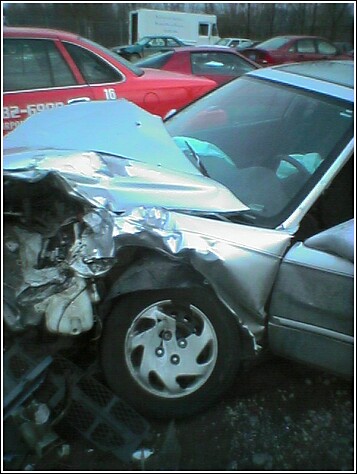
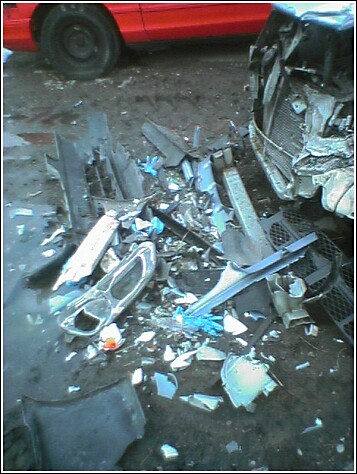
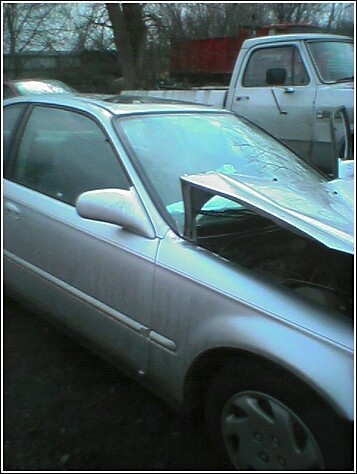
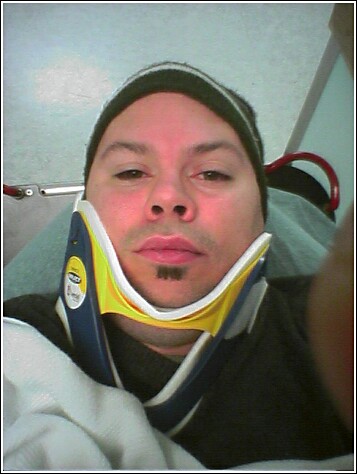
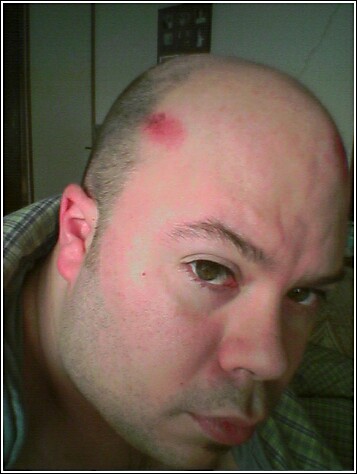
I’m not sure if I mentioned this or not, but I am flat on my
back now after the accident. I tried to work this past Friday, but the
effort was so uncomfortable and made me so tired that I was not able to
return. I am going to receive disability pay one way or the other depending
on the prognosis I receive tomorrow when I finally get in to see an
orthopedic doctor at the University of Michigan Hospital. Anyway, I’ve been
trying to catch up on my movie watching. I watched Anchorman (I do not
recommend it), The Alamo (Fantastic! Rent this one!) and finally, Luther.
Luther, to be blunt, was just awesome. It was inspiring and I
found myself cheering him on many times. It was an incredible character
study of how conflicted Luther was. His intention was never to leave the
Catholic church, but found himself extremely at odds with the church after
it refused to make any changes. Despite his many flaws, Luther had a
fervent commitment to Christ and, at least as his character was revealed in
the movie, was a bit naïve when it came to church politics. His commitment
to Scripture was awe-inspiring. Honestly, there were so many memorable
scenes in the movie that I cannot even begin to tell you how much I enjoyed
it. I’m now waiting for the movie about Calvin. :-)
If you guys wouldn’t mind, please continue to keep us in your
prayers. The insurance company money for the car was far less than we
expected (Minus the deductible and payoff, it was only $632) and although I
am grateful to get anything, I’m only receiving 60% pay for disability.
Most likely, we will have to use the insurance money for bills.
Also, and maybe Gary can shed some light on this, I’ve been
having strange dreams. The day after the accident, I was waking up
remembering more of the accident. Most of the dreams I cannot remember, but
last night I dreamed that I was kidnapped and beat up by two large men who
took me to a house with two other men. The funny part is (and you guys will
find this funny although at the time in the dream it was quite scary), one
of the men that I was taken to was William Shatner. The other was the short
K&B Construction guy from the TV show Home Improvement. Anyway, I was quite
lucky that my wife accidentally woke me up when she got up for work and the
dream ended just after the men released me.
Anyway, if I do not get a chance to tell you, I hope everyone
has a very blessed Easter Sunday!
Thanks everyone,
Dave M.
P.S. If anybody ever wants to chat, I’m online almost all day now…the laptop
is sitting on the coffee table beside the couch that is my new home and is
always on. Just email me.
Sunday, March 20, 2005
A week ago, I was waking up in great pain and still very confused. This morning, as I write this, my wife and I are preparing to go to church. To say that we are blessed is such an understatement. People that saw the car were not asking, “Is everyone ok?” They were asking “Who died?”
I have been dealing with a great deal of guilt. I have prayed, but all of my prayers have been those “theologically correct” prayers that although are heart-felt, are often only being done out of obedience, rather than desire. This morning, I woke up with a song on my heart. When I was little, my parents bought me a B.J. Thomas gospel album. My parents were pretty big southern gospel fans so I grew up on some of the “standards.” One of those was “His Eye Is On The Sparrow.” The lyrics are:
Why should I feel discouraged, why should the shadows come,
Why should my heart be lonely, and long for heaven and home,
When Jesus is my portion? My constant friend is He:
His eye is on the sparrow, and I know He watches me;
His eye is on the sparrow, and I know He watches me.
I sing because I'm happy,I sing because I'm free,
For His eye is on the sparrow,And I know He watches me.
"Let not your heart be troubled," His tender word I hear,
And resting on His goodness, I lose my doubts and fears;
Though by the path He leadeth, but one step I may see;
His eye is on the sparrow, and I know He watches me;
His eye is on the sparrow, and I know He watches me.
I sing because I'm happy,I sing because I'm free,
For His eye is on the sparrow,And I know He watches me.
Whenever I am tempted, whenever clouds arise,
When songs give place to sighing, when hope within me dies,
I draw the closer to Him, from care He sets me free;
His eye is on the sparrow, and I know He watches me;
His eye is on the sparrow, and I know He watches me.
I sing because I'm happy,I sing because I'm free,
For His eye is on the sparrow,And I know He watches me
I’ve spent my time now looking up and asking why. Not “Why did this happen?” but “Why, God, did you put our family through this? What are you trying to show us? What are you trying to teach us?” I’m not sure if I have all those answers yet, but one of those is to slow down and maintain faith. Thank you to everyone for your words of encouragement.
Thursday, March 17, 2005
Whoops! Let's try this again, It has indeed been a tough week. I saw this meditation this morning ironically written by a great theologian who died just this Saturday, the day that Kandice and I were in the accident. Here it is:
Our Last and Only Hope
A lesson in trust from a grounded crow.
By Stanley J. Grenz | posted 02/12/2004
"Everything is possible for him who believes." Immediately the boy's father exclaimed, "I do believe; help me overcome my unbelief." Mark 9:20-24
Trust me! I can help you." The minute I spoke the words, I realized how utterly useless voicing them was, indeed how ridiculous my entire demeanor must be. There I was, crouching with hand extended, slowing walking forward, talking to a crow. And I didn't even like crows.
It was promising to be another crisp fall day in the Lower Mainland in British Columbia. The sun was peering over the partly cloudy horizon as I took my daily morning walk. I was deep in thought, sorting through—well, to be honest, I was fretting about—the many details our pending move to Texas had imposed on the largely stress-free existence that I had grown accustomed to. As I rounded the corner and headed down the lane that runs along the Little League baseball field, my ruminations were interrupted by the obnoxious cawing of two crows. I quickly noticed the source of their consternation. In the grassy meadow, a third crow was jumping and flapping about, vainly attempting to fly. Somehow the scavenger had gotten his left wing stuck in the handle of a pink plastic bag. The poor bird had no chance whatsoever of getting airborne.
I gave the crow a wide berth and went on my way. His fellow crows would have to remedy his plight. And if they were unsuccessful? Well, one less crow in the world would not be a great loss, especially given the havoc these mean creatures can inflict on other birds.
I was only a few paces down the lane when the full importance of the crow's plight registered in my mind: Unless I do something, this hapless bird is going to die. I turned in my tracks. At first I remained a good distance away from the crow. Crows are capable of launching a dive-bomber attack so threatening that it elicits terror in the heart of anyone who evokes their ire. Despite what I surmised could be warlike chirping of the two potential assailants above, I decided to see if I could get near enough to the grounded bird to remedy his plight.
The imprisoned crow initially responded with a flutter-filled hop away from me. But soon he seemed to realize that he did not have the wherewithal to evade me, and he signaled his capitulation by collapsing in the grass, gazing at me. It was then that I spoke: "Trust me! I can help you." A fruitless, dumb gesture, I immediately thought. But how else could I assure the crow not only that I intended him no harm but also that I was his only hope for survival?
I would like to believe that the creature somehow understood my words. In any case, he didn't move a muscle—indeed, he appeared uncharacteristically calm as I advanced slowly but steadily in his direction. The crow seemed to have decided to entrust his life to my hands, for good or for ill. (Equally miraculous, from my vantage point, the two feathered dive-bombers kept their distance in the tree above.) Stealthily I moved in, until I was so close that I could have actually touched the small body that lay motionless in the grass in front of me. I repeated softly, "Trust me! I can help you." Then I reached out with both hands, carefully tore the plastic and pulled away the pink prison that had held the crow captive.
Mission completed, I resumed my walk. I became engrossed once again in my interior world, filled with the concerns about our pending move—selling a house, dealing with the immigration process, hoping that a position would open up for my wife. Again my thoughts were interrupted by a short series of caws coming from three crows flying overhead. As the birds expressed what seemed to be their gratitude, the words I had voiced just a few moments earlier reverberated in my mind: "Trust me! I can help you." But this time, they were not spoken by me, but to me.
I continued my morning walk, musing about how often our loving heavenly Father speaks to us in the midst of difficulties, and about the response—faith—that his words are designed to engender in us. And I was quick to draw the obvious lesson: Just as the hapless creature needed to admit the hopelessness of his plight, cease struggling, and trust me unconditionally to receive my assistance, so also we must entrust ourselves to God.
As important as this connection is, it was not God's message for me that crisp fall day. My musings took me to a deeper question: Why did the bird exercise faith? Only then did I glimpse what stands at the heart of the great mystery of trust: The crow had realized in his own way what we are called to realize. We only become willing to risk all and take the bold step of genuine faith—of entrusting ourselves to God fully, completely, unreservedly, for good or for ill—when we see in this particular situation that God is our last and only hope.
Stanley J. Grenz is the Pioneer McDonald Professor of Theology at Carey Theological College, Vancouver, British Columbia.
Remembering Stan Grenz
The theologian died Saturday at 55.
posted 03/14/2005 10:45 a.m.
On Saturday, March 12, Baptist theologian Stanley Grenz passed away after suffering a brain hemorrhage at the untimely age of 55.
Dr. Grenz was a prolific writer, having authored or co-authored 25 books. He taught at a variety of institutions including Regent College, Baylor University, and Carey Theological College. Grenz was a leading expert on the theology of Wolfhart Pannenberg, but he was also a favorite theologian of the emerging church network. A brief biographical sketch can be found on his personal website
Stan Grenz served as a consulting editor for Christianity Today, and in 2004 CT published this meditation about learning to trust God in the midst of our anxieties. We urge you to read it today in his memory.
Stanley J. Grenz was born in Alpena, Michigan, on January 7, 1950, the youngest of three children of the Rev. and Mrs. Richard A. Grenz. Stan is a graduate of the University of Colorado at Boulder (Bachelor of Arts with distinction, 1973), Denver Seminary (M.Div. with honors, 1976), and the University of Munich, Germany (D.Theol. magna cum laude, 1978), where he wrote a dissertation entitled “Isaac Backus--Puritan and Baptist” under the supervision of Wolfhart Pannenberg. Stan’s academic excellence as a student was applauded through membership in Phi Beta Kappa (University of Colorado) and by being the recipient of the Robert G. Kay Scholastic Award (Denver Seminary). During his professional career, he has been the recipient of a Fulbright Grant for sabbatical study in Munich, Germany (1987-1988) as well as a Theological Research Fellowship awarded by the Association of Theological Schools (1993), and he was named a fellow with the Henry Luce III Fellowship in Theology program (1999-2000). Stan has also been included in two editions of Who's Who in Religion, as well as in the 2002 edition of Who's Who in U.S. Writers, Editors and Poets.
On June 13, 1976, Stan was ordained into the gospel ministry. He has worked within the local church context as youth director and assistant pastor (Northwest Baptist Church, Denver, CO, 1971-1976), pastor (Rowandale Baptist Church, Winnipeg, MB 1979-1981), and interim pastor on several occasions. In addition he has preached and lectured in numerous churches, colleges, universities and seminaries in North America, Europe, Africa, Australia and Asia.
To date, Stan has authored or co-authored twenty-five books, the latest of which is Rediscovering the Triune God: The Trinity in Contemporary Theology (Minneapolis: Fortress, 2004). He has served as editor or co-editor for two Festschriften, contributed articles to over two dozen other volumes, and has seen to print over a hundred essays and an additional eighty book reviews. These have appeared in journals ranging from Christianity Today and the Christian Century to Christian Scholars Review, Theology Today and the Journal of Ecumenical Studies. Several of these essays and books have won writing awards in the USA and Canada.
Stan has served as president of the National Association of Baptist Professors of Religion (1989-90) and as a member of the national board of the American Academy of Religion (1989-90), the South Dakota Committee on the Humanities (1986-90), the editorial board of Perspectives in Religious Studies (1985-88), the Baptist Joint Committee on Public Affairs (1983-88), the steering committee of the Evangelical Theology Group of the American Academy of Religion (1988-1995; co-chair, 1990-1994), the Ethics Commission of the Baptist World Alliance (1986-2000), the Social Action Commission of the Evangelical Fellowship of Canada (1994-1996), and the steering committee of the Canadian Evangelical Theological Association (1996-2000). Currently, he participates in both the Doctrine Commission and the Theological Education Committee of the Baptist World Alliance, is a consulting editor of Christianity Today, and sits on the advisory boards of several publishing companies and Christian organizations.
For twelve years (1990-2002), Stan held the position of Pioneer McDonald Professor of Baptist Heritage, Theology and Ethics at Carey Theological College and at Regent College in Vancouver BC. After a one-year sojourn as Distinguished Professor of Theology at Baylor University and Truett Seminary in Waco TX (2002-2003), he returned to Carey in August 2003 to resume his duties as Pioneer McDonald Professor of Theology. In fall 2004, he assumed an additional appointment as Professor of Theological Studies at Mars Hill Graduate School, Seattle WA. Prior to his initial move to Vancouver, he was Professor of Systematic Theology and Christian Ethics at the North American Baptist Seminary, Sioux Falls SD (1981-1990). While in the pastorate (1979-1981), he taught courses both at the University of Winnipeg and at Winnipeg Theological Seminary (now Providence Seminary). From 1996 to 1999 he carried an additional appointment as Professor of Theology and Ethics (Affiliate) at Northern Baptist Theological Seminary, Lombard IL.
Edna Grenz is Minister of Worship at First Baptist Church, Vancouver, where Stan has sung in the choir and played guitar and trumpet in the worship team. Stan and Edna are the parents of two married children, Joel and Corina (Kuban), and one grandchild, Anika Grace Kuban, all of whom reside in the Vancouver area.
The theologian died Saturday at 55.
posted 03/14/2005 10:45 a.m.
On Saturday, March 12, Baptist theologian Stanley Grenz passed away after suffering a brain hemorrhage at the untimely age of 55.
Dr. Grenz was a prolific writer, having authored or co-authored 25 books. He taught at a variety of institutions including Regent College, Baylor University, and Carey Theological College. Grenz was a leading expert on the theology of Wolfhart Pannenberg, but he was also a favorite theologian of the emerging church network. A brief biographical sketch can be found on his personal website
Stan Grenz served as a consulting editor for Christianity Today, and in 2004 CT published this meditation
Stanley J. Grenz was born in Alpena, Michigan, on January 7, 1950, the youngest of three children of the Rev. and Mrs. Richard A. Grenz. Stan is a graduate of the University of Colorado at Boulder (Bachelor of Arts with distinction, 1973), Denver Seminary (M.Div. with honors, 1976), and the University of Munich, Germany (D.Theol. magna cum laude, 1978), where he wrote a dissertation entitled “Isaac Backus--Puritan and Baptist” under the supervision of Wolfhart Pannenberg. Stan’s academic excellence as a student was applauded through membership in Phi Beta Kappa (University of Colorado) and by being the recipient of the Robert G. Kay Scholastic Award (Denver Seminary). During his professional career, he has been the recipient of a Fulbright Grant for sabbatical study in Munich, Germany (1987-1988) as well as a Theological Research Fellowship awarded by the Association of Theological Schools (1993), and he was named a fellow with the Henry Luce III Fellowship in Theology program (1999-2000). Stan has also been included in two editions of Who's Who in Religion, as well as in the 2002 edition of Who's Who in U.S. Writers, Editors and Poets.
On June 13, 1976, Stan was ordained into the gospel ministry. He has worked within the local church context as youth director and assistant pastor (Northwest Baptist Church, Denver, CO, 1971-1976), pastor (Rowandale Baptist Church, Winnipeg, MB 1979-1981), and interim pastor on several occasions. In addition he has preached and lectured in numerous churches, colleges, universities and seminaries in North America, Europe, Africa, Australia and Asia.
To date, Stan has authored or co-authored twenty-five books, the latest of which is Rediscovering the Triune God: The Trinity in Contemporary Theology (Minneapolis: Fortress, 2004). He has served as editor or co-editor for two Festschriften, contributed articles to over two dozen other volumes, and has seen to print over a hundred essays and an additional eighty book reviews. These have appeared in journals ranging from Christianity Today and the Christian Century to Christian Scholars Review, Theology Today and the Journal of Ecumenical Studies. Several of these essays and books have won writing awards in the USA and Canada.
Stan has served as president of the National Association of Baptist Professors of Religion (1989-90) and as a member of the national board of the American Academy of Religion (1989-90), the South Dakota Committee on the Humanities (1986-90), the editorial board of Perspectives in Religious Studies (1985-88), the Baptist Joint Committee on Public Affairs (1983-88), the steering committee of the Evangelical Theology Group of the American Academy of Religion (1988-1995; co-chair, 1990-1994), the Ethics Commission of the Baptist World Alliance (1986-2000), the Social Action Commission of the Evangelical Fellowship of Canada (1994-1996), and the steering committee of the Canadian Evangelical Theological Association (1996-2000). Currently, he participates in both the Doctrine Commission and the Theological Education Committee of the Baptist World Alliance, is a consulting editor of Christianity Today, and sits on the advisory boards of several publishing companies and Christian organizations.
For twelve years (1990-2002), Stan held the position of Pioneer McDonald Professor of Baptist Heritage, Theology and Ethics at Carey Theological College and at Regent College in Vancouver BC. After a one-year sojourn as Distinguished Professor of Theology at Baylor University and Truett Seminary in Waco TX (2002-2003), he returned to Carey in August 2003 to resume his duties as Pioneer McDonald Professor of Theology. In fall 2004, he assumed an additional appointment as Professor of Theological Studies at Mars Hill Graduate School, Seattle WA. Prior to his initial move to Vancouver, he was Professor of Systematic Theology and Christian Ethics at the North American Baptist Seminary, Sioux Falls SD (1981-1990). While in the pastorate (1979-1981), he taught courses both at the University of Winnipeg and at Winnipeg Theological Seminary (now Providence Seminary). From 1996 to 1999 he carried an additional appointment as Professor of Theology and Ethics (Affiliate) at Northern Baptist Theological Seminary, Lombard IL.
Edna Grenz is Minister of Worship at First Baptist Church, Vancouver, where Stan has sung in the choir and played guitar and trumpet in the worship team. Stan and Edna are the parents of two married children, Joel and Corina (Kuban), and one grandchild, Anika Grace Kuban, all of whom reside in the Vancouver area.
Wednesday, March 16, 2005



Monday, March 14, 2005
Sunday, March 13, 2005

Subscribe to:
Posts (Atom)
