Wednesday, March 23, 2005

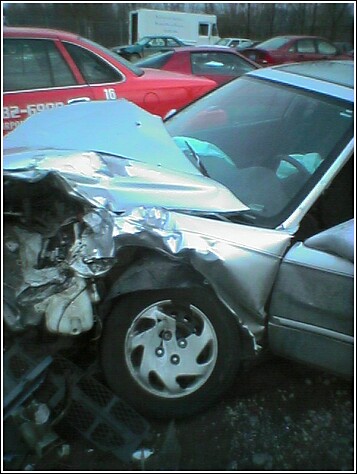
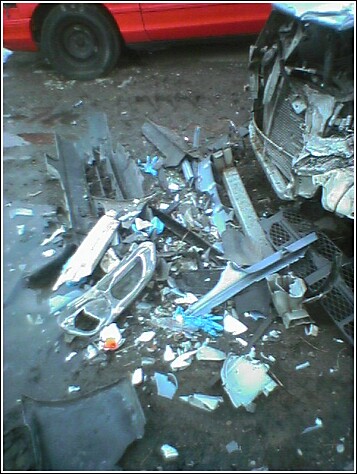
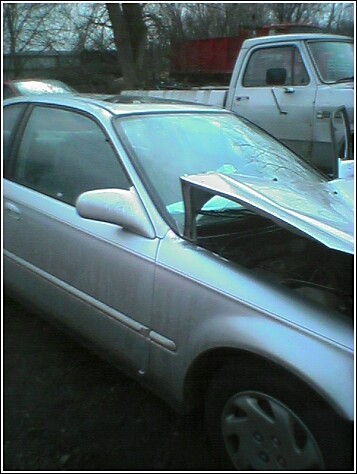
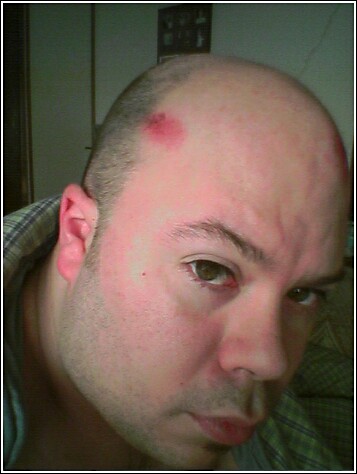
I’m not sure if I mentioned this or not, but I am flat on my
back now after the accident. I tried to work this past Friday, but the
effort was so uncomfortable and made me so tired that I was not able to
return. I am going to receive disability pay one way or the other depending
on the prognosis I receive tomorrow when I finally get in to see an
orthopedic doctor at the University of Michigan Hospital. Anyway, I’ve been
trying to catch up on my movie watching. I watched Anchorman (I do not
recommend it), The Alamo (Fantastic! Rent this one!) and finally, Luther.
Luther, to be blunt, was just awesome. It was inspiring and I
found myself cheering him on many times. It was an incredible character
study of how conflicted Luther was. His intention was never to leave the
Catholic church, but found himself extremely at odds with the church after
it refused to make any changes. Despite his many flaws, Luther had a
fervent commitment to Christ and, at least as his character was revealed in
the movie, was a bit naïve when it came to church politics. His commitment
to Scripture was awe-inspiring. Honestly, there were so many memorable
scenes in the movie that I cannot even begin to tell you how much I enjoyed
it. I’m now waiting for the movie about Calvin. :-)
If you guys wouldn’t mind, please continue to keep us in your
prayers. The insurance company money for the car was far less than we
expected (Minus the deductible and payoff, it was only $632) and although I
am grateful to get anything, I’m only receiving 60% pay for disability.
Most likely, we will have to use the insurance money for bills.
Also, and maybe Gary can shed some light on this, I’ve been
having strange dreams. The day after the accident, I was waking up
remembering more of the accident. Most of the dreams I cannot remember, but
last night I dreamed that I was kidnapped and beat up by two large men who
took me to a house with two other men. The funny part is (and you guys will
find this funny although at the time in the dream it was quite scary), one
of the men that I was taken to was William Shatner. The other was the short
K&B Construction guy from the TV show Home Improvement. Anyway, I was quite
lucky that my wife accidentally woke me up when she got up for work and the
dream ended just after the men released me.
Anyway, if I do not get a chance to tell you, I hope everyone
has a very blessed Easter Sunday!

Thanks everyone,

Dave M.

P.S. If anybody ever wants to chat, I’m online almost all day now…the laptop
is sitting on the coffee table beside the couch that is my new home and is
always on. Just email me.

 Posted by Hello

Sunday, March 20, 2005

A week ago, I was waking up in great pain and still very confused. This morning, as I write this, my wife and I are preparing to go to church. To say that we are blessed is such an understatement. People that saw the car were not asking, “Is everyone ok?” They were asking “Who died?”
I have been dealing with a great deal of guilt. I have prayed, but all of my prayers have been those “theologically correct” prayers that although are heart-felt, are often only being done out of obedience, rather than desire. This morning, I woke up with a song on my heart. When I was little, my parents bought me a B.J. Thomas gospel album. My parents were pretty big southern gospel fans so I grew up on some of the “standards.” One of those was “His Eye Is On The Sparrow.” The lyrics are:

Why should I feel discouraged, why should the shadows come,
Why should my heart be lonely, and long for heaven and home,
When Jesus is my portion? My constant friend is He:
His eye is on the sparrow, and I know He watches me;
His eye is on the sparrow, and I know He watches me.

I sing because I'm happy,I sing because I'm free,
For His eye is on the sparrow,And I know He watches me.

"Let not your heart be troubled," His tender word I hear,
And resting on His goodness, I lose my doubts and fears;
Though by the path He leadeth, but one step I may see;
His eye is on the sparrow, and I know He watches me;
His eye is on the sparrow, and I know He watches me.

I sing because I'm happy,I sing because I'm free,
For His eye is on the sparrow,And I know He watches me.

Whenever I am tempted, whenever clouds arise,
When songs give place to sighing, when hope within me dies,
I draw the closer to Him, from care He sets me free;
His eye is on the sparrow, and I know He watches me;
His eye is on the sparrow, and I know He watches me.

I sing because I'm happy,I sing because I'm free,
For His eye is on the sparrow,And I know He watches me

I’ve spent my time now looking up and asking why. Not “Why did this happen?” but “Why, God, did you put our family through this? What are you trying to show us? What are you trying to teach us?” I’m not sure if I have all those answers yet, but one of those is to slow down and maintain faith. Thank you to everyone for your words of encouragement.

Thursday, March 17, 2005

Whoops! Let's try this again, It has indeed been a tough week. I saw this meditation this morning ironically written by a great theologian who died just this Saturday, the day that Kandice and I were in the accident. Here it is:
Our Last and Only Hope
A lesson in trust from a grounded crow.
By Stanley J. Grenz | posted 02/12/2004


"Everything is possible for him who believes." Immediately the boy's father exclaimed, "I do believe; help me overcome my unbelief." Mark 9:20-24

Trust me! I can help you." The minute I spoke the words, I realized how utterly useless voicing them was, indeed how ridiculous my entire demeanor must be. There I was, crouching with hand extended, slowing walking forward, talking to a crow. And I didn't even like crows.
It was promising to be another crisp fall day in the Lower Mainland in British Columbia. The sun was peering over the partly cloudy horizon as I took my daily morning walk. I was deep in thought, sorting through—well, to be honest, I was fretting about—the many details our pending move to Texas had imposed on the largely stress-free existence that I had grown accustomed to. As I rounded the corner and headed down the lane that runs along the Little League baseball field, my ruminations were interrupted by the obnoxious cawing of two crows. I quickly noticed the source of their consternation. In the grassy meadow, a third crow was jumping and flapping about, vainly attempting to fly. Somehow the scavenger had gotten his left wing stuck in the handle of a pink plastic bag. The poor bird had no chance whatsoever of getting airborne.
I gave the crow a wide berth and went on my way. His fellow crows would have to remedy his plight. And if they were unsuccessful? Well, one less crow in the world would not be a great loss, especially given the havoc these mean creatures can inflict on other birds.
I was only a few paces down the lane when the full importance of the crow's plight registered in my mind: Unless I do something, this hapless bird is going to die. I turned in my tracks. At first I remained a good distance away from the crow. Crows are capable of launching a dive-bomber attack so threatening that it elicits terror in the heart of anyone who evokes their ire. Despite what I surmised could be warlike chirping of the two potential assailants above, I decided to see if I could get near enough to the grounded bird to remedy his plight.
The imprisoned crow initially responded with a flutter-filled hop away from me. But soon he seemed to realize that he did not have the wherewithal to evade me, and he signaled his capitulation by collapsing in the grass, gazing at me. It was then that I spoke: "Trust me! I can help you." A fruitless, dumb gesture, I immediately thought. But how else could I assure the crow not only that I intended him no harm but also that I was his only hope for survival?
I would like to believe that the creature somehow understood my words. In any case, he didn't move a muscle—indeed, he appeared uncharacteristically calm as I advanced slowly but steadily in his direction. The crow seemed to have decided to entrust his life to my hands, for good or for ill. (Equally miraculous, from my vantage point, the two feathered dive-bombers kept their distance in the tree above.) Stealthily I moved in, until I was so close that I could have actually touched the small body that lay motionless in the grass in front of me. I repeated softly, "Trust me! I can help you." Then I reached out with both hands, carefully tore the plastic and pulled away the pink prison that had held the crow captive.
Mission completed, I resumed my walk. I became engrossed once again in my interior world, filled with the concerns about our pending move—selling a house, dealing with the immigration process, hoping that a position would open up for my wife. Again my thoughts were interrupted by a short series of caws coming from three crows flying overhead. As the birds expressed what seemed to be their gratitude, the words I had voiced just a few moments earlier reverberated in my mind: "Trust me! I can help you." But this time, they were not spoken by me, but to me.
I continued my morning walk, musing about how often our loving heavenly Father speaks to us in the midst of difficulties, and about the response—faith—that his words are designed to engender in us. And I was quick to draw the obvious lesson: Just as the hapless creature needed to admit the hopelessness of his plight, cease struggling, and trust me unconditionally to receive my assistance, so also we must entrust ourselves to God.
As important as this connection is, it was not God's message for me that crisp fall day. My musings took me to a deeper question: Why did the bird exercise faith? Only then did I glimpse what stands at the heart of the great mystery of trust: The crow had realized in his own way what we are called to realize. We only become willing to risk all and take the bold step of genuine faith—of entrusting ourselves to God fully, completely, unreservedly, for good or for ill—when we see in this particular situation that God is our last and only hope.
Stanley J. Grenz is the Pioneer McDonald Professor of Theology at Carey Theological College, Vancouver, British Columbia.
 Posted by Hello
It has indeed been a tough week. I saw this meditation this morning ironically written by a great theologian who died just this Saturday, the day that Kandice and I were in the accident. Here it is: Posted by Hello
Remembering Stan Grenz
The theologian died Saturday at 55.
posted 03/14/2005 10:45 a.m.
On Saturday, March 12, Baptist theologian Stanley Grenz passed away after suffering a brain hemorrhage at the untimely age of 55.
Dr. Grenz was a prolific writer, having authored or co-authored 25 books. He taught at a variety of institutions including Regent College, Baylor University, and Carey Theological College. Grenz was a leading expert on the theology of Wolfhart Pannenberg, but he was also a favorite theologian of the emerging church network. A brief biographical sketch can be found on his personal website .
Stan Grenz served as a consulting editor for Christianity Today, and in 2004 CT published this meditation about learning to trust God in the midst of our anxieties. We urge you to read it today in his memory.
Stanley J. Grenz was born in Alpena, Michigan, on January 7, 1950, the youngest of three children of the Rev. and Mrs. Richard A. Grenz. Stan is a graduate of the University of Colorado at Boulder (Bachelor of Arts with distinction, 1973), Denver Seminary (M.Div. with honors, 1976), and the University of Munich, Germany (D.Theol. magna cum laude, 1978), where he wrote a dissertation entitled “Isaac Backus--Puritan and Baptist” under the supervision of Wolfhart Pannenberg. Stan’s academic excellence as a student was applauded through membership in Phi Beta Kappa (University of Colorado) and by being the recipient of the Robert G. Kay Scholastic Award (Denver Seminary). During his professional career, he has been the recipient of a Fulbright Grant for sabbatical study in Munich, Germany (1987-1988) as well as a Theological Research Fellowship awarded by the Association of Theological Schools (1993), and he was named a fellow with the Henry Luce III Fellowship in Theology program (1999-2000). Stan has also been included in two editions of Who's Who in Religion, as well as in the 2002 edition of Who's Who in U.S. Writers, Editors and Poets.
On June 13, 1976, Stan was ordained into the gospel ministry. He has worked within the local church context as youth director and assistant pastor (Northwest Baptist Church, Denver, CO, 1971-1976), pastor (Rowandale Baptist Church, Winnipeg, MB 1979-1981), and interim pastor on several occasions. In addition he has preached and lectured in numerous churches, colleges, universities and seminaries in North America, Europe, Africa, Australia and Asia.
To date, Stan has authored or co-authored twenty-five books, the latest of which is Rediscovering the Triune God: The Trinity in Contemporary Theology (Minneapolis: Fortress, 2004). He has served as editor or co-editor for two Festschriften, contributed articles to over two dozen other volumes, and has seen to print over a hundred essays and an additional eighty book reviews. These have appeared in journals ranging from Christianity Today and the Christian Century to Christian Scholars Review, Theology Today and the Journal of Ecumenical Studies. Several of these essays and books have won writing awards in the USA and Canada.
Stan has served as president of the National Association of Baptist Professors of Religion (1989-90) and as a member of the national board of the American Academy of Religion (1989-90), the South Dakota Committee on the Humanities (1986-90), the editorial board of Perspectives in Religious Studies (1985-88), the Baptist Joint Committee on Public Affairs (1983-88), the steering committee of the Evangelical Theology Group of the American Academy of Religion (1988-1995; co-chair, 1990-1994), the Ethics Commission of the Baptist World Alliance (1986-2000), the Social Action Commission of the Evangelical Fellowship of Canada (1994-1996), and the steering committee of the Canadian Evangelical Theological Association (1996-2000). Currently, he participates in both the Doctrine Commission and the Theological Education Committee of the Baptist World Alliance, is a consulting editor of Christianity Today, and sits on the advisory boards of several publishing companies and Christian organizations.
For twelve years (1990-2002), Stan held the position of Pioneer McDonald Professor of Baptist Heritage, Theology and Ethics at Carey Theological College and at Regent College in Vancouver BC. After a one-year sojourn as Distinguished Professor of Theology at Baylor University and Truett Seminary in Waco TX (2002-2003), he returned to Carey in August 2003 to resume his duties as Pioneer McDonald Professor of Theology. In fall 2004, he assumed an additional appointment as Professor of Theological Studies at Mars Hill Graduate School, Seattle WA. Prior to his initial move to Vancouver, he was Professor of Systematic Theology and Christian Ethics at the North American Baptist Seminary, Sioux Falls SD (1981-1990). While in the pastorate (1979-1981), he taught courses both at the University of Winnipeg and at Winnipeg Theological Seminary (now Providence Seminary). From 1996 to 1999 he carried an additional appointment as Professor of Theology and Ethics (Affiliate) at Northern Baptist Theological Seminary, Lombard IL.
Edna Grenz is Minister of Worship at First Baptist Church, Vancouver, where Stan has sung in the choir and played guitar and trumpet in the worship team. Stan and Edna are the parents of two married children, Joel and Corina (Kuban), and one grandchild, Anika Grace Kuban, all of whom reside in the Vancouver area. Posted by Hello

Monday, March 07, 2005

Roy Moore: 'We Have No Morality Without an Acknowledgment of God'
As the Supreme Court decides how to rule after hearing arguments over the Ten Commandments, the former chief justice of Alabama's highest court says removing government religious monuments are like getting a ticket for driving 50 mph in a 55 zone.
posted 03/07/2005 09:30 a.m.

After being removed from his post as chief justice of the Alabama Supreme Court for refusing to remove a six-ton granite monument of the Ten Commandments, Roy Moore has taken his fight across the country. He says not only are monuments of the Ten Commandments constitutional, but some acknowledgment of God is necessary for the survival of the constitution. CT online assistant editor Rob Moll spoke with Moore the day after the Supreme Court heard arguments over two Ten Commandment cases, in Texas and Kentucky.
You had representatives attending the oral arguments on Wednesday. Do you have any initial thoughts about the case?
Both of the defendants in these cases, defending the Ten Commandments, are doing so with secular humanism, with our own history, arguing that the Ten Commandments are not relevant today. It's in a museum setting. It's the smallest of the monuments. They make every effort to distance themselves from God, and that is the danger that people do not realize. I hope people will wake up to this.
What we've got to watch here is not what they do, but what they say. If they leave the Ten Commandments or if they take the Ten Commandments and they base their ruling on secular humanism, that is a devastating precedent. It's basically saying you can do something as long as you don't profess it, as long as you don't believe it. That is the danger.
The Court refused my case because we said the monument acknowledges the sovereign God, which is permissible under the First Amendment. They then take these two cases that are argued on the basis of a denial of God's sovereignty, that it's a matter of history. The people that are arguing that position think they're doing right, but I would submit to you that it's a very wrong thing to do because you're bowing down to government.
That is the argument in other cases, that as long as the Ten Commandments or "under God" doesn't mean anything religious, then it's permissible.
One of the most offensive arguments that I've found was in one of the briefs said that any reasonable observer would recognize that this monument is in the town where Madalyn Murray O'Hair lived. During all that controversy, it was a hotbed of litigation, and it was never contested. That argument says that because the prime atheist in our country didn't protest, it should be okay. And that's terrible.
Because so many Christians make historical arguments for the Ten Commandments or other monuments, it may seem strange to hear you say that the government must acknowledge God. What is the legal basis for your argument?
It's the very purpose of the First Amendment. It's what we have the First Amendment for. That is still the right we have, to acknowledge God. It protected us from federal government interference. And that's exactly what's happening. The federal courts are saying we cannot acknowledge God. But they have no jurisdiction. It's the fundamental organic law of our country. God. God's law was the basis which entitles us to have a Constitution and a country.
The court is not even interpreting the First Amendment properly, despite the fact that they have no jurisdiction. When they do have jurisdiction they rule by their feelings, not by law. To properly interpret a law you have to interpret the words in the statute or constitutional amendment. That is "Congress shall make no law respecting an establishment of religion, or prohibiting the free exercise thereof," being the first part of the First Amendment. The courts are not even trying to do that. They're ignoring the words of the statute and ruling by their own feelings and predilections with meaningless tests that have no relationship to law—the coercion test, the endorsement test, and the historical analysis test.
To make that clear, I use an example. Say you were stopped for speeding and given a ticket and go to court in a municipality, and the judge said, "I'm going to have to put you in jail for six months and fine you $5,000." You say, "Why?" "You were speeding." You say, "Judge, I was going 50 miles per hour, the speed limit was 55."
He would stop you and say, "Wait a minute, we can't address the definition of speeding or what speeding is. From the reasonable observer standing on the corner, they said you were going faster than the other cars. It would be endorsing speeding if we allowed this to occur."
You would say, "Judge, I was going 50 and the speed limit is 55."
He says, "No we can't define the speed limit. And furthermore you coerced other drivers to pull over because they weren't going as fast as you."
You say, "That's not speeding. We've got to look at what the speed limit was."
Finally, if he said, "Well because you were going 50 and we've historically allowed people to go 50, we're going to overlook it."
We'll that's allowing you to do something you have every right to do. The speed limit was 55; you were going 50.
So you see what they're doing is ruling by paths that have no relationship when they don't define the words. That's the clearest example I can use to tell you what's happening with the Supreme Court. If you read their opinions, they sound so eloquent, so lofty, but they're meaningless. They're not related to law. The word religion was defined by the United States Supreme Court and by others as the duties which we owe to the Creator and the manner of discharging it, i.e. it recognized God and it recognized higher laws.
The Supreme Court doesn't want to recognize the definition. So as they did in my case in Alabama, they ignore it and say it's impossible to define. Their basic mistake is to assume that government gives you freedom of conscience, when our Supreme Court in 1931 recognized that freedom came from obedience to the will of God. They just lost those concepts.
As you said, those arguing to keep the Ten Commandments are not arguing that government should acknowledge God. You are the only one making that claim. What chance is there that the Supreme Court would recognize that right?
All I can say is it's our responsibility to offer the truth. It's plain, simple fact that the law is the law. It hasn't changed. The acknowledgement of God is basic to our society, to our law, and to our morality. Christianity is in a prime position to wake them up. I can't do it alone, and Christians need to be awakened to what's going on in our country. If we continue to let this happen, what will happen is a complete departure from our constitutional form of government. The basis of our morality is being destroyed. We have no morality without an acknowledgment of God.
Would you prefer the Supreme Court reject the Ten Commandments rather than allow them for only historical reasons?
I think the First Amendment of the United States Constitution doesn't prohibit displays acknowledging God, any acknowledgment of God, whether by state or federal official. My preference would be the United States Supreme Court dismiss the case and say they don't have jurisdiction. The First Amendment tells us to keep out of it. But if you ask how they could rule, I'd say, if they're going to leave the Commandments, they better recognize that nothing prohibits such conduct. But they don't have jurisdiction to rule.
 Posted by Hello